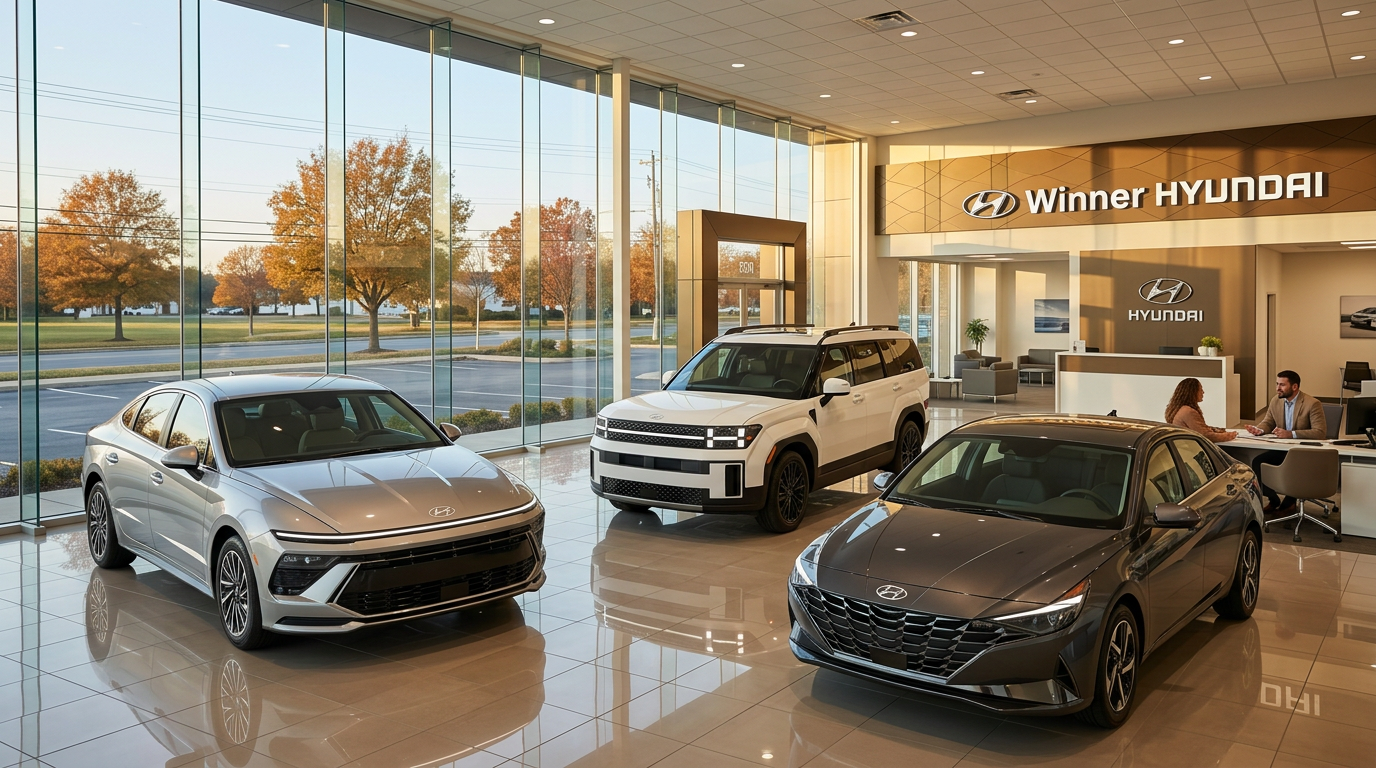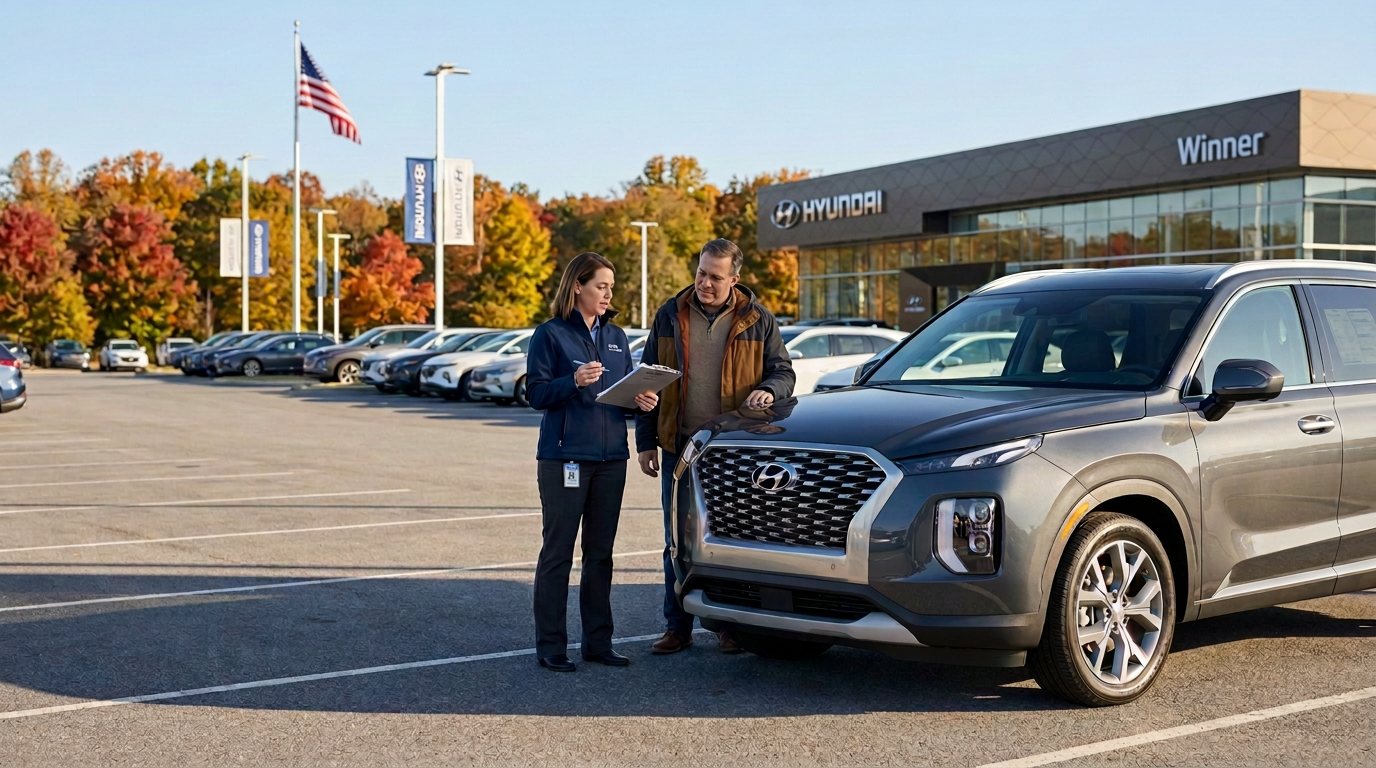




Financing a pre-owned vehicle in Delaware requires submitting an auto loan application through a lender or dealership finance center, verifying income and credit details, and calculating total costs alongside Delaware's 5.25% motor vehicle documentation fee. Buyers submit proof of income, proof of residence, and active auto insurance to finalize loan underwriting before completing vehicle titling and registration.
Securing auto financing involves selecting between credit unions, commercial banks, and direct dealership financing networks. While independent pre-approval gives you a baseline interest rate, dealership finance departments often leverage relationships with multiple financial institutions to secure competitive terms tailored to your credit profile. Applying directly through our finance team allows us to compare multiple lender offers simultaneously, helping you find terms that align with your monthly budget.
The auto financing underwriting process focuses on several core criteria:
- Credit History and Score: Lenders evaluate your payment history, outstanding debt, and overall credit utilization to determine loan eligibility and rate brackets.
- Debt-to-Income Ratio: Underwriters review your monthly income relative to recurring debt obligations to ensure manageable monthly car payments.
- Down Payment and Trade-In Value: Supplying a cash down payment or trading in a vehicle reduces the total principal loan amount, which lowers monthly payments and improves overall loan approval odds.
- Vehicle Age and Mileage: Loan terms for pre-owned cars often depend on the model year and odometer reading, with newer, lower-mileage vehicles qualifying for extended repayment terms.
Gathering your documentation before shopping accelerates the financing timeline. Borrowers should arrive with their most recent pay stubs, W-2 forms, valid driver's license, utility bill for residency verification, and current vehicle title if trading in a car. For military personnel stationed at Dover Air Force Base or local government employees navigating daily commutes, setting up clear loan parameters beforehand ensures a streamlined purchase experience. You can begin reviewing available pre-owned models by exploring our showroom on South Dupont Highway or by reaching out to our finance specialists at (302) 877-2489.
Table of Contents
- Does Delaware Charge Sales Tax on Used Car Purchases and Registration?
- What Features Should You Look for in a Used Vehicle for Delaware Weather?
- What Is Included in a Comprehensive Pre-Purchase Vehicle Inspection?
- Is It Better to Buy a Certified Pre-Owned Car Versus a Standard Used Car?
- Common Questions About Financing and Buying Used Cars
- Where Can You Find Reliable Used Cars and Complete DMV Transfers in Dover?
Does Delaware Charge Sales Tax on Used Car Purchases and Registration?
Delaware does not levy a general state sales tax on used car purchases, but the state assesses a 5.25% motor vehicle documentation fee based on the purchase price or NADA trade-in value at the time of titling. Additional state fees include a $35 title fee (or $55 lien fee when financing) and an annual passenger car $40 annual registration fee.
Calculating total out-the-door costs requires looking beyond the vehicle's agreed purchase price. The Delaware Division of Motor Vehicles calculates the motor vehicle documentation fee using either the actual purchase price or the average trade-in value specified in the current NADA Official Used Car Guide, whichever is higher. However, if you trade in a vehicle during the purchase, the value of that trade-in is subtracted from the purchase price before calculating the 5.25% motor vehicle documentation fee, providing significant tax-equivalent savings.
To understand how these fees structure an actual transaction, consider the mandatory fees required at titling:
| Fee Type | Standard Cost | Description |
|---|---|---|
| Motor Vehicle Document Fee | 5.25% of sale price | State assessment on vehicle titling (less trade-in allowance) [1] |
| Standard Vehicle Title Fee | $35 | Assessed when titling a vehicle with no lien recorded [1] |
| Title Fee with Lien | $55 | Assessed when a lender holds a lien against the vehicle [1] |
| Passenger Car Registration | $40 per year | Annual state registration fee for standard passenger vehicles [1] |
Budgeting for these titling and registration expenses ensures there are no surprises when finalizing your transaction. Incorporating documentation fees and registration charges into your financing plan allows you to structure loan terms accurately from the start. Buyers interested in establishing their purchasing power ahead of time can get started by prequalifying for auto financing online.
What Features Should You Look for in a Used Vehicle for Delaware Weather?
Selecting a pre-owned vehicle for mid-Atlantic weather demands features built to handle humid summers, wet autumn precipitation, and icy winter roads. All-wheel drive or front-wheel drive powertrains, robust climate control systems, and heated cabin amenities provide essential traction and comfort throughout changing seasonal conditions.
Mid-Atlantic climate shifts bring diverse driving challenges. Cold winter months frequently produce black ice and slush, while summer brings high humidity and sudden heavy downpours. Front-wheel drive offers reliable everyday traction because the weight of the engine rests directly over the drive wheels. For superior stability on slippery roads, all-wheel drive systems automatically shift torque between the front and rear axles when wheel slip is detected, providing added confidence when navigating rural routes around Middletown during winter storms.
Essential vehicle features to prioritize for year-round reliability include:
- All-Wheel Drive (AWD): Enhances cornering grip and acceleration on wet, snowy, or unpaved road surfaces.
- Heated Front Seats and Mirrors: Clears frost quickly from side glass while delivering rapid cabin warming on cold mornings.
- Automatic Climate Control: Maintains consistent cabin temperature and manages interior humidity to prevent windshield fogging during damp weather.
- Anti-Lock Braking System (ABS) and Traction Control: Prevents wheel lockup during hard stops on slick pavement, preserving steering control.
- Driver-Assist Safety Suites: Features such as blind-spot monitoring, lane-keeping assist, and automatic emergency braking bolster situational awareness during poor visibility.
Evaluating winter-ready equipment during your vehicle search ensures your pre-owned car delivers year-round utility. V
What Is Included in a Comprehensive Pre-Purchase Vehicle Inspection?
A comprehensive pre-purchase vehicle inspection (PPI) is a thorough mechanical evaluation performed by a qualified technician to assess a used car's structural, mechanical, and electrical condition before sale. The inspection identifies hidden mechanical wear, previous accident damage, deferred maintenance, and potential component failures that are not visible during a casual visual walkaround.
While a state DMV safety inspection verifies baseline roadworthiness parameters like light operation and tire minimums, an independent PPI evaluates long-term vehicle health. Technicians systematically examine core powertrain systems, structural frame rails, braking hardware, and onboard electronics.
A complete pre-purchase inspection covers several detailed operational areas:
- Engine and Diagnostic Checks: Technicians connect an OBD-II diagnostic scanner to read active or historical engine trouble codes. They inspect fluid levels, check for oil or coolant leaks, test battery health, and inspect belts and hoses for cracking.
- Undercarriage and Suspension: Elevating the vehicle on a lift reveals subframe integrity, floor pan rust, exhaust system leaks, CV boot tearing, steering rack play, and shock absorber wear.
- Brake System Evaluation: The inspection measures brake pad thickness, rotor surface condition, caliper function, and hydraulic brake line integrity.
- Body and Frame Alignment: Technicians measure body panel gaps, check paint depth consistency, and inspect structural frame points to detect previous collision repairs or unaddressed frame bending.
- Road Test Performance: A dynamic test drive verifies transmission shift smoothness, engine power delivery, wheel alignment tracking, suspension dampening over bumps, and ABS engagement.
Receiving a detailed inspection report gives you complete clarity regarding the vehicle's true mechanical condition. If minor issues are discovered, you can factor future repair estimates into your overall buying decision or request reconditioning prior to purchase.
Is It Better to Buy a Certified Pre-Owned Car Versus a Standard Used Car?
Deciding between a Certified Pre-Owned (CPO) car and a standard used vehicle depends on your budget, desire for warranty protection, and preference for manufacturer inspection standards. CPO vehicles carry a higher initial price point than non-certified used cars, but they compensate with factory-backed warranty extensions, rigorous inspection standards, and built-in roadside support.
Standard pre-owned vehicles encompass a wide range of model years, price points, and makes. They offer lower initial acquisition costs, making them appealing to budget-conscious shoppers. However, standard used vehicles are generally sold with remaining factory warranty coverage only, or under dealer-specific limited warranties.
Hyundai Certified Pre-Owned vehicles undergo a stringent factory vetting process designed to guarantee long-term reliability:
- Age and Mileage Eligibility: Vehicles must be within current model year limits and pass strict odometer thresholds to qualify for certification.
- 173-Point Inspection: Factory-trained technicians complete an exhaustive 173-point mechanical, safety, and cosmetic inspection, reconditioning or replacing worn components with genuine OEM parts.
- Powertrain Warranty Coverage: CPO models include the remainder of Hyundai's 10-year/100,000-mile powertrain limited warranty coverage from the original in-service date.
- Comprehensive Vehicle History: Every CPO model comes with a verified CARFAX vehicle history report to confirm clear title history.
- 24/7 Roadside Assistance: CPO buyers receive complimentary roadside assistance covering emergency towing, battery jump-starts, flat tire changes, and fuel delivery.
| Comparison Feature | Certified Pre-Owned (CPO) | Standard Used Vehicle |
|---|---|---|
| Inspection Standard | Mandatory 173-point factory inspection | Multi-point safety check |
| Extended Warranty | 10-year/100,000-mile powertrain coverage | Remaining original warranty or optional service contract |
| Reconditioning Parts | Genuine OEM replacement parts | Standard aftermarket or OEM replacement parts |
| Roadside Support | Included 24/7 roadside assistance | Optional add-on protection |
Shoppers seeking maximum value across diverse price brackets can browse our pre-owned vehicle inventory, while those prioritizing manufacturer warranty coverage can explore our verified certified pre-owned Hyundai inventory.
Common Questions About Financing and Buying Used Cars
Q: What documents do you need to bring when financing a pre-owned vehicle?
Borrowers should bring a valid driver's license, current proof of income (such as recent pay stubs or tax documents), proof of residency (a utility bill or bank statement matching your address), and proof of active auto insurance. If trading in a vehicle, bring the original vehicle title or current payoff information.
Q: How does a vehicle trade-in affect the Delaware documentation fee?
Trading in a vehicle reduces the taxable amount used to compute Delaware's 5.25% motor vehicle documentation fee. The trade-in allowance is subtracted from the vehicle purchase price, resulting in lower total fee liabilities at titling.
Q: What is the difference between a Delaware DMV safety inspection and a pre-purchase mechanical inspection?
A Delaware DMV facility inspection checks basic safety and emissions requirements necessary for road titling. A pre-purchase inspection performed by a technician provides a deep mechanical evaluation of engine diagnostics, transmission health, suspension wear, and potential future repair risks.
Q: Does Hyundai roadside assistance cover certified pre-owned vehicles?
Hyundai Certified Pre-Owned vehicles include manufacturer-backed roadside coverage for emergency tire changes, jump-starts, lockout service, and towing. Owners can contact Hyundai Roadside Assistance at 1-800-243-7766 for immediate emergency support.
Q: Can you finance extended protection plans into a pre-owned vehicle loan?
Most auto lenders permit buyers to roll extended service contracts, gap protection, and initial titling fees into their total vehicle loan, allowing you to spread protection costs across monthly installments rather than paying out of pocket at signing.
Where Can You Find Reliable Used Cars and Complete DMV Transfers in Dover?
Finding a reliable pre-owned car requires choosing a dealership that combines rigorous vehicle reconditioning with complete DMV titling and registration processing on site. Buying from an established local dealer eliminates the stress of handling title assignments, lien registrations, and document fee calculations on your own.
Our team at Winner Hyundai streamlines every step of the pre-owned purchasing process. Every vehicle on our lot undergoes comprehensive mechanical evaluation before being offered for sale, ensuring you drive away with total peace of mind. Our finance specialists coordinate directly with state titling authorities to handle Delaware registration requirements, calculate applicable document fees accurately, and structure financing solutions tailored to your financial goals.
Whether you are looking for a fuel-efficient commuter car, a versatile family crossover with all-wheel drive, or a Certified Pre-Owned vehicle backed by factory warranty coverage, our staff is dedicated to providing a transparent buying experience. You can start your journey today by visiting our Dover location or by giving our team a call at (302) 877-2489.
Keep Your Vehicle Running Strong
Keep your vehicle performing at its best with our service team: