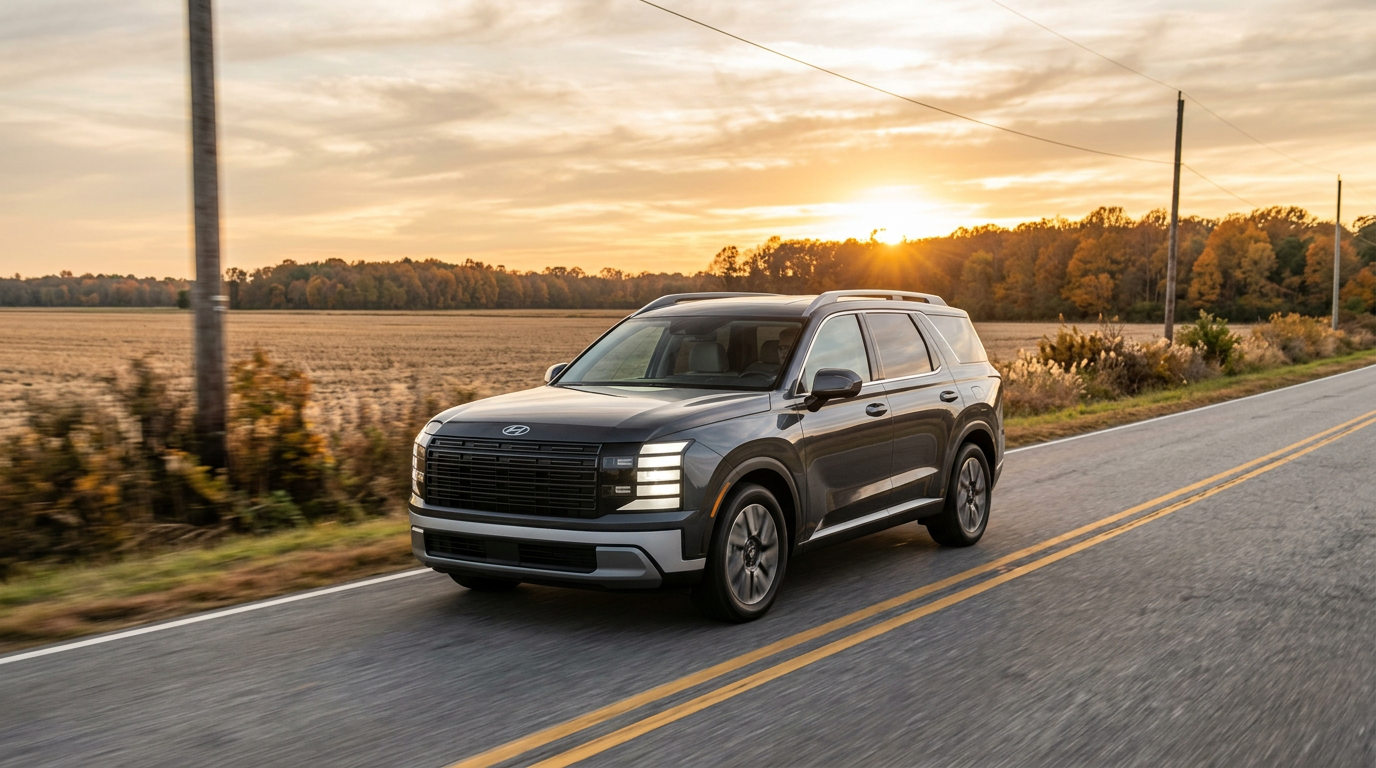



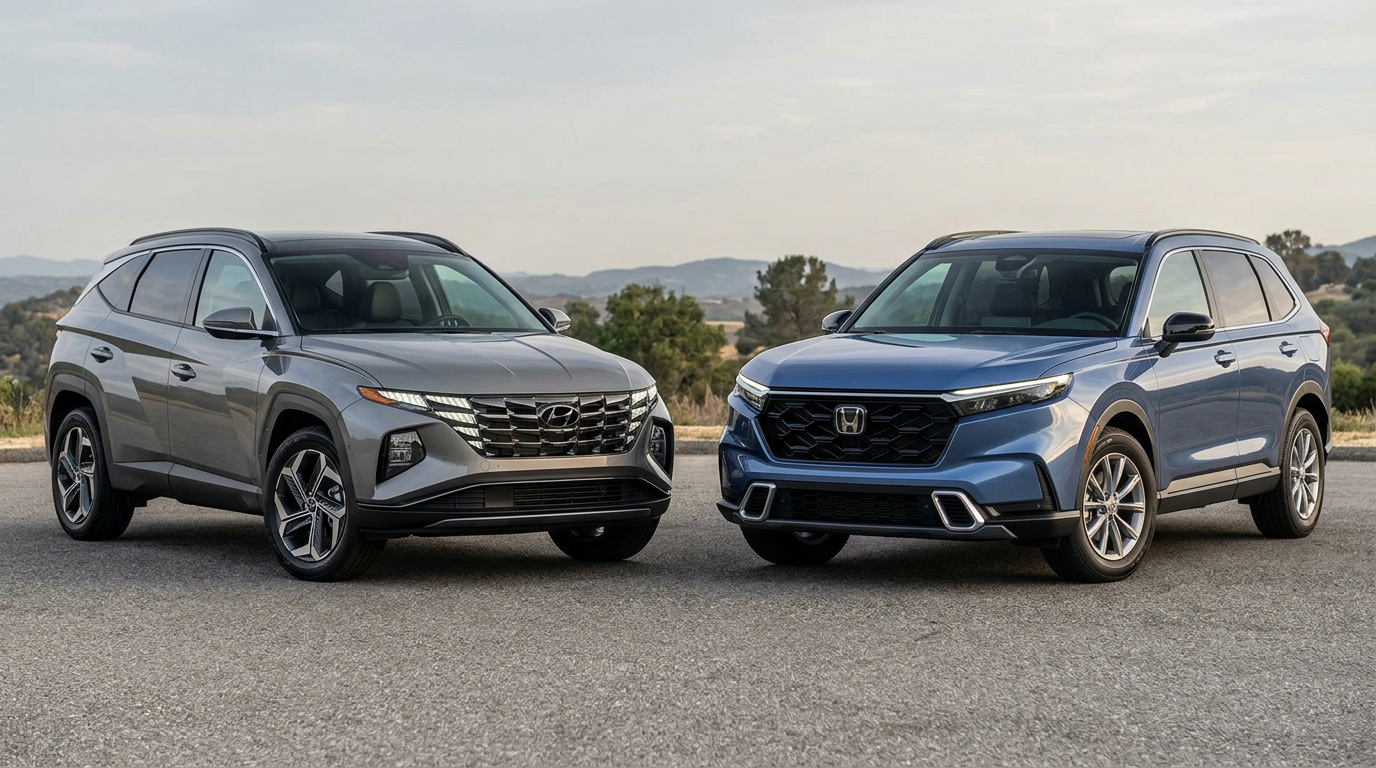
The 2026 Hyundai Tucson delivers strong overall performance flexibility and power compared to the 2026 Honda CR-V, offering up to 231 horsepower in its hybrid trim and 268 horsepower in its plug-in hybrid model, whereas the Honda CR-V maxes out at 204 horsepower in its hybrid trim. While the base CR-V gas model provides 190 horsepower from a turbocharged 1.5-liter engine, the Tucson gas model features a naturally aspirated 2.5L four-cylinder engine with 187 horsepower and 178 lb-ft of torque mated to an eight-speed automatic transmission, offering a different driving feel than Honda's continuously variable transmission.
When comparing standard gas engines, the non-turbo 2.5L engine in the Tucson generates strong, linear power across the rev band. Power transfers directly through a conventional torque-converter eight-speed automatic transmission, giving drivers sharp gear shifts and predictable pedal response. The standard Honda CR-V uses a smaller 1.5-liter turbocharged engine generating 190 horsepower and 179 lb-ft of torque, but pairs it exclusively with a continuously variable transmission (CVT). Drivers who prefer distinct step-gear shifting may appreciate the Tucson during highway merging and passing maneuvers.
For buyers seeking upgraded efficiency and muscle, the powertrain gap widens further in favor of Hyundai. The 2026 Hyundai Tucson Hybrid pairs a 1.6L turbocharged engine with an electric motor to generate a combined 231 horsepower and 271 lb-ft of torque, shifting through a proven six-speed automatic transmission. By contrast, the Honda CR-V Hybrid uses a 2.0-liter naturally aspirated engine with dual electric motors for 204 horsepower and 247 lb-ft of torque. Furthermore, Hyundai offers the Tucson Plug-in Hybrid with 268 horsepower and standard all-wheel drive, a high-output PHEV configuration not offered in the CR-V lineup.
For drivers taking on daily commutes through Dover, the Tucson provides balanced power delivery that handles flat coastal plain routes and merging highway traffic with equal ease. To inspect the full lineup or arrange a test drive, feel free to give our team a call at (302) 877-2489 or stop by our Dover showroom location.
Table of Contents
- How Do the Hybrid Powertrains and EPA Fuel Economy Ratings Compare?
- Transmission Response and Towing Capacity: 8-Speed Automatic vs. CVT
- How Does Tucson and CR-V Performance Compare to the Toyota RAV4?
- What Reliability Ratings, Maintenance Costs, and Warranties Support Long-Term Value?
- Frequently Asked Performance Questions About the 2026 Tucson and CR-V
- Experience 2026 Hyundai Tucson Performance
How Do the Hybrid Powertrains and EPA Fuel Economy Ratings Compare?
The 2026 Hyundai Tucson Hybrid delivers an EPA-estimated 38 mpg combined in its Blue SE HEV AWD trim while providing significantly more horsepower and torque than the Honda CR-V Hybrid. While front-wheel drive CR-V Hybrid trims achieve up to 43 mpg combined and all-wheel drive CR-V Hybrids reach up to 40 mpg combined, the Tucson Hybrid trades a minor mileage delta for a substantial performance advantage of 231 horsepower and 271 lb-ft of torque, compared to Honda's 204 horsepower and 247 lb-ft of torque.
Hyundai achieves this higher torque output by utilizing a 1.6L turbocharged engine paired with a parallel electric motor and a geared six-speed automatic transmission. Most hybrid crossovers in this segment employ naturally aspirated engines connected to electronic continuously variable transmissions (e-CVTs), which can cause high engine RPM droning during sustained uphill climbs or rapid acceleration. The Tucson Hybrid’s geared setup preserves traditional shift feel while delivering immediate low-end electric torque.
For commuters comparing standard gas efficiency, the non-hybrid Tucson gas model delivers an EPA-rated 25 mpg city / 33 mpg highway / 28 mpg combined with front-wheel drive, and 24 mpg city / 30 mpg highway / 26 mpg combined when equipped with all-wheel drive. Standard gas CR-V models achieve 28 mpg city / 34 mpg highway in front-wheel drive and 27 mpg city / 32 mpg highway in all-wheel drive.
Drivers interested in zero-emission daily commuting can opt for the Tucson Plug-in Hybrid ( 268 horsepower), which delivers an EPA-rated 77 MPGe combined in electric operation, 35 mpg combined in hybrid operation, and 32 miles of all-electric driving range. Honda currently offers no plug-in hybrid variant for the CR-V.
- 2026 Hyundai Tucson Blue SE HEV AWD: 38 mpg combined ( 38 city / 38 hwy), 231 horsepower, 271 lb-ft of torque.
- 2026 Hyundai Tucson Hybrid (SEL / Limited AWD): 36 mpg combined, 231 horsepower, 271 lb-ft of torque.
- 2026 Hyundai Tucson PHEV AWD: 77 MPGe combined, 35 mpg combined gas-hybrid, 32 miles EV range, 268 horsepower.
- 2026 Honda CR-V Hybrid AWD: 40 mpg combined, 204 horsepower, 247 lb-ft of torque.
- 2026 Honda CR-V Hybrid FWD: 43 mpg combined, 204 horsepower, 247 lb-ft of torque.
If you are open to pre-owned options, you can also browse our pre-owned vehicle selection.
Transmission Response and Towing Capacity: 8-Speed Automatic vs. CVT
The standard gas 2026 Hyundai Tucson out-tows the standard gas Honda CR-V with a maximum towing capacity of 2,000 lbs (and up to 2,750 lbs when maximum equipped) compared to the CR-V gas model's 1,500-pound limit. In addition to towing more weight, the Tucson uses a standard eight-speed automatic transmission ( SHIFTRONIC®) that provides crisp gear engagement, contrasting with the continuous gear-ratio adjustments of the CR-V's continuously variable transmission.
Buyers comparing these crossovers on a test drive often notice how the Tucson's traditional eight-speed automatic transmission provides distinct, predictable shift points when accelerating onto highway merging ramps compared to the continuous engine speed of a CVT. Under hard throttle application, CVTs often force the engine to hold high revolutions, creating a noticeable cabin hum. The SHIFTRONIC® transmission in the Tucson lets drivers manually select gears when descending grades or pulling a light trailer, maintaining direct mechanical connection and engine braking control.
Towing capabilities further separate these two compact SUVs:
- Hyundai Tucson Gas (2.5L): Standard tow rating of 2,000 lbs, with maximum capability reaching 2,750 lbs when properly equipped with trailer brakes.
- Honda CR-V Gas (1.5L Turbo): Rated for up to 1,500 lbs towing capacity.
- Honda CR-V Hybrid (2.0L): Rated for up to 1,000 lbs towing capacity.
Whether hauling small utility trailers, personal watercraft, or weekend camping gear, the Tucson provides a higher margin of towing confidence. Buyers exploring value-minded choices with strong capability can check certified pre-owned Hyundai pricing to compare late-model availability.
How Does Tucson and CR-V Performance Compare to the Toyota RAV4?
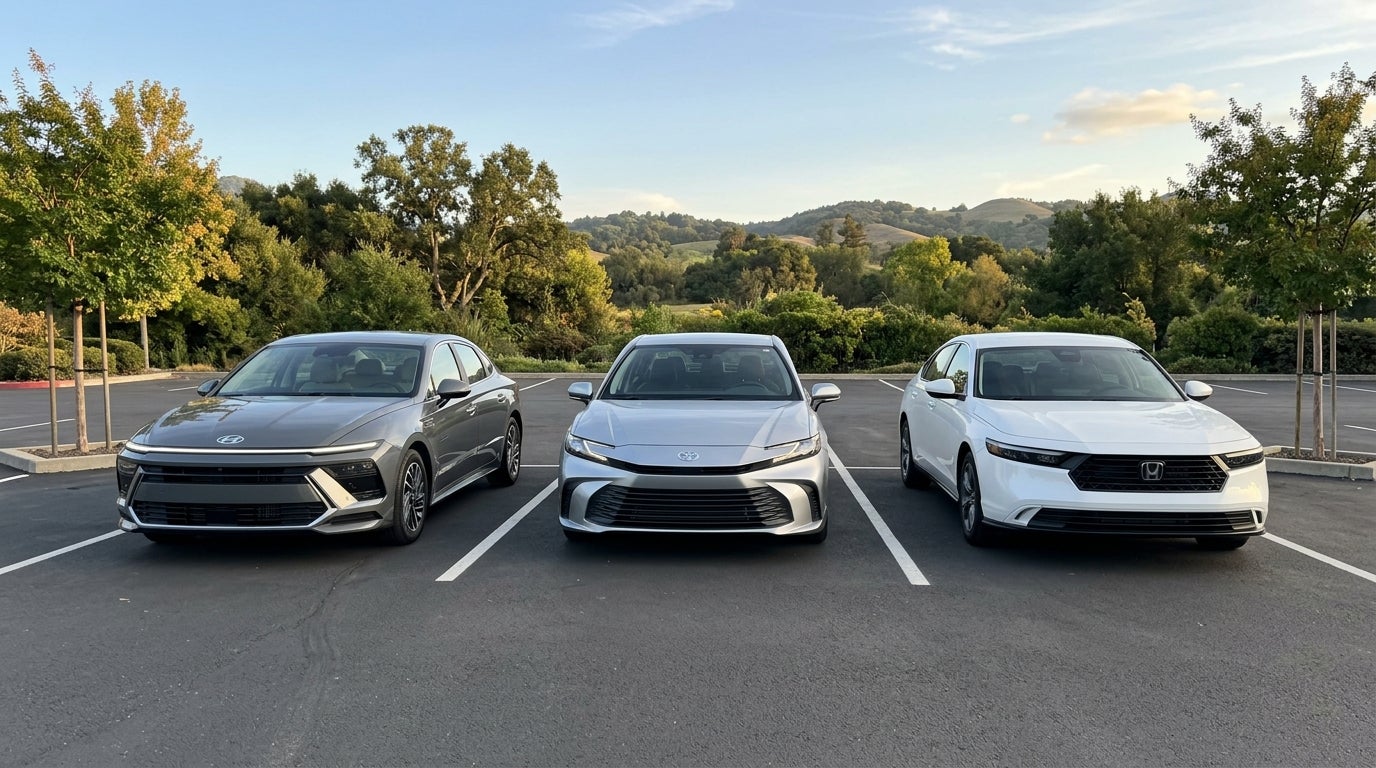
The standard Toyota RAV4 gas model delivers 203 horsepower from its 2.5-liter engine, outpowering the base 187-horsepower Tucson gas engine and the 190-horsepower CR-V gas engine, but the 2026 Hyundai Tucson Hybrid ( 231 horsepower) and Tucson Plug-in Hybrid ( 268 horsepower) comfortably exceed the peak output of both the RAV4 gas (203 hp) and RAV4 Hybrid (219 hp).
In terms of torque, the Hyundai Tucson Hybrid family generates 271 lb-ft of torque, outclassing the RAV4 Hybrid's 163 lb-ft of gas engine torque and the CR-V Hybrid's 247 lb-ft of system torque. This extra low-end power gives the Tucson Hybrid an advantage when pulling away from stops or passing slower traffic on two-lane roads.
- Base Gas Engine Horsepower: Toyota RAV4 (203 hp) > Honda CR-V (190 hp) > Hyundai Tucson 2.5L ( 187 hp).
- Hybrid System Horsepower: Hyundai Tucson Hybrid ( 231 hp) > Toyota RAV4 Hybrid (219 hp) > Honda CR-V Hybrid (204 hp).
- Plug-In Hybrid Horsepower: Toyota RAV4 Prime (302 hp) > Hyundai Tucson PHEV ( 268 hp) > Honda CR-V (No PHEV offered).
- Standard Towing Capacity: Hyundai Tucson ( 2,000 lbs standard / 2,750 lbs max) > Toyota RAV4 (1,500 lbs standard) = Honda CR-V (1,500 lbs).
For suburban commuters navigating the farmland connectors around Middletown, the Tucson Hybrid's combined torque and geared automatic transmission offer responsive acceleration through variable road conditions. When you are ready to explore purchase options, you can get started by prequalifying for credit online.
What Reliability Ratings, Maintenance Costs, and Warranties Support Long-Term Value?
The 2026 Hyundai Tucson offers long-term protection with America's Best Warranty, featuring a 10-year/100,000-mile powertrain warranty and a 5-year/60,000-mile limited warranty, whereas Honda covers the CR-V with a 3-year/36,000-mile basic warranty and a 5-year/60,000-mile powertrain warranty. In addition, Hyundai includes complimentary factory maintenance for the first 3 years or 36,000 miles, helping lower initial 5-year out-of-pocket ownership costs relative to rivals.
While the Honda CR-V maintains a strong historical reputation for low unscheduled repair frequency, Hyundai narrows the ownership cost gap through comprehensive warranty backing and bundled factory service. By eliminating routine oil change and tire rotation costs during early ownership, Tucson owners retain lower predictable routine maintenance expenses.
Entry pricing across the 2026 Tucson lineup provides options across a range of price points, starting with the SE FWD at a base MSRP of $29,700 (plus a $1,650 destination charge). Moving to the standard all-wheel drive Blue SE HEV AWD hybrid brings an entry base MSRP of $32,800. Higher trim levels like the SEL Convenience HEV AWD start at $35,250 base MSRP, while the fully equipped Limited PHEV AWD reaches $48,900 base MSRP.
To keep your crossover running at peak efficiency throughout its lifecycle, our factory-trained service technicians are ready to assist with routine care when you are scheduling a maintenance appointment online.
Frequently Asked Performance Questions About the 2026 Tucson and CR-V
Q: Does the 2026 Hyundai Tucson Hybrid require a plug or external charger?
No, the standard 2026 Hyundai Tucson Hybrid uses regenerative braking and engine power to self-charge its onboard battery automatically during driving. Only the Tucson Plug-in Hybrid (PHEV) features an external charge port, which allows drivers to plug in and receive up to 32 miles of all-electric driving before switching over to standard hybrid operation.
Q: Which SUV offers higher overall horsepower in its hybrid configuration?
The 2026 Hyundai Tucson Hybrid provides 231 horsepower and 271 lb-ft of torque, outperforming the Honda CR-V Hybrid's total system output of 204 horsepower and 247 lb-ft of torque. The Tucson achieves this higher rating by combining a 1.6L turbocharged engine with an electric motor and a geared six-speed automatic transmission.
Q: Can the 2026 Hyundai Tucson handle light trail driving or inclement weather?
Yes, Tucson models equipped with Hyundai's active all-wheel drive system continuously monitor road traction to distribute engine torque between the front and rear axles. With ample ground clearance and selectable drive modes, the Tucson manages wet pavement, light mud, unpaved gravel, and slippery winter conditions with confidence.
Q: How does standard gas engine acceleration compare between the Tucson and CR-V?
The Honda CR-V's 1.5-liter turbocharged engine delivers slightly faster 0-60 mph launch times, but the Tucson's naturally aspirated 2.5L engine paired with an eight-speed automatic transmission provides linear acceleration without reliance on turbo spooling or the engine droning associated with continuous variable transmissions.
Q: What routine document preparation helps speed up a vehicle test drive or purchase visit?
Arriving with a valid driver's license, a current auto insurance card, and recent proof of income or trade-in documentation allows our dealership staff to quickly organize test drives and complete financing steps without delays.
Experience 2026 Hyundai Tucson Performance
With its advanced hybrid system delivering up to 268 horsepower and an eight-speed automatic transmission, the 2026 Hyundai Tucson offers a compelling performance package that surpasses many competitors. Combined with America's Best Warranty—including a 10-year/100,000-mile powertrain warranty—the Tucson delivers driving confidence, competitive fuel efficiency, and overall value.
Our team at Winner Hyundai is dedicated to helping you explore the Tucson lineup firsthand. Whether you want to test drive the standard gas 2.5L engine or experience the torque of the 1.6L turbocharged engine hybrid, we are here to assist you.
Contact our sales team directly at (302) 877-2489 to ask questions or set up your appointment. when you are ready to visit us, visit our Dover showroom at 591 S Dupont Hwy, Dover, DE 19901 to compare trims and get behind the wheel today.
© 2026 Winner Hyundai. All rights reserved.