

Blog / Maintenance & Service

What Happens During a Hyundai Multi-Point Inspection?

Winner Hyundai Multi Point Inspection


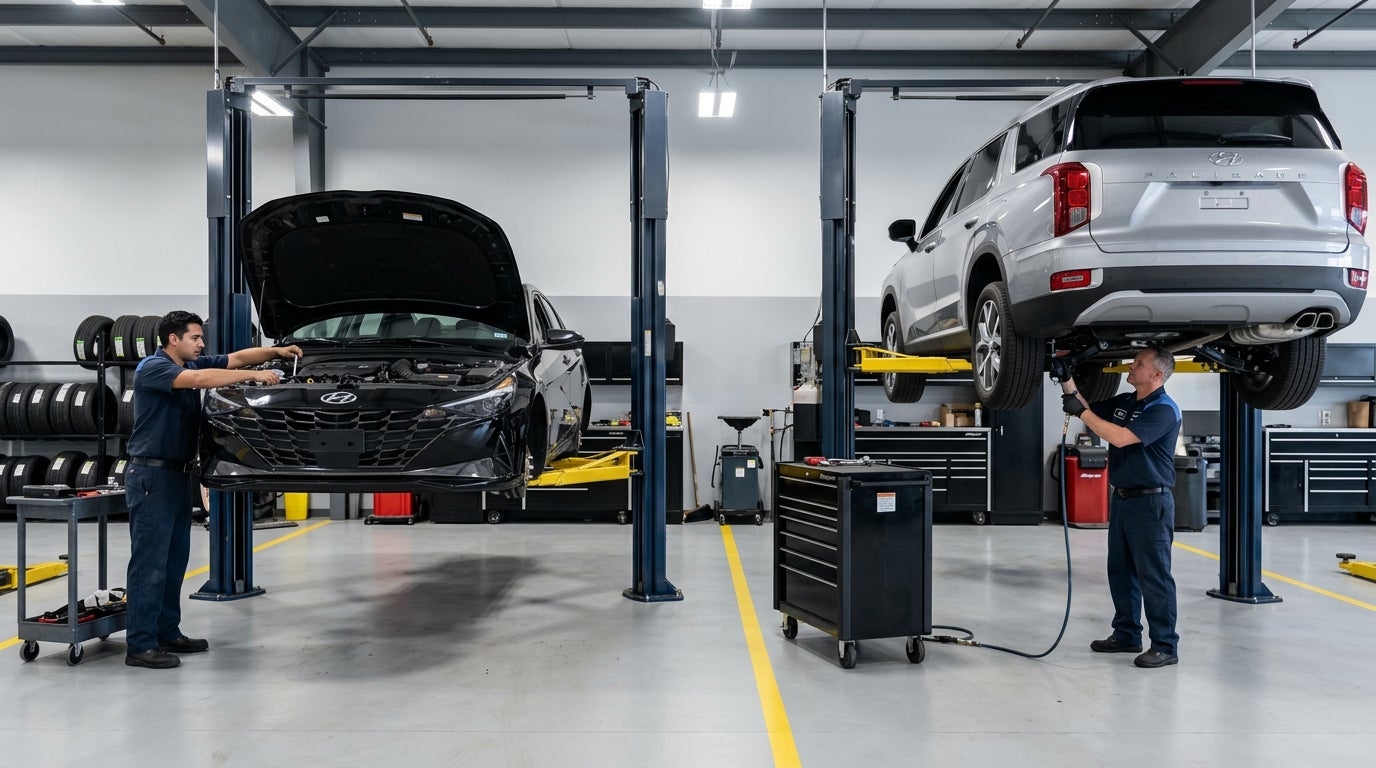
A Hyundai multi-point inspection is a visual and mechanical diagnostic evaluation where certified technicians examine vital vehicle systems, including brake pad thickness, tire tread depth and inflation pressure, battery health, fluid condition, drive belts, and suspension components. Technicians document findings using a standardized color-coded reporting system—green for optimal condition, yellow for upcoming maintenance needs, and red for urgent safety repairs—allowing vehicle owners to address minor wear before severe mechanical damage occurs.

During every routine service visit, factory-trained technicians systematically evaluate critical components across the entire chassis and engine bay:

  • Braking Systems: Measuring front and rear brake pad lining thickness in millimeters, inspecting rotor surface integrity for scoring or heat cracks, and testing hydraulic brake fluid moisture content.
  • Tires and Wheels: Checking tread depth across inner, center, and outer tread blocks, identifying irregular alignment wear, inspecting sidewalls for impacts, and adjusting cold inflation pressure.
  • Under-hood Fluids: Verifying level and clarity for engine oil, engine coolant, transmission fluid, power steering fluid, and windshield washer fluid.
  • Electrical and Battery Systems: Conducting a conductance test on the 12-volt battery to measure cold-cranking capacity, inspecting terminal posts for corrosion, and checking exterior lighting.
  • Underbody and Drivetrain: Inspecting steering gearboxes, CV axle boots, shock absorbers, struts, exhaust systems, and fuel lines for leaks or structural damage.

Commuters traveling agricultural back roads around Camden frequently encounter airborne dust and loose gravel that can saturate filters earlier than standard intervals. Measuring air filter restriction during routine checks ensures engine efficiency remains uncompromised. Performing these structured checks during routine oil service allows drivers to plan future maintenance proactively. To have factory-certified specialists evaluate your vehicle, visit our Dover service center location or give our service desk a call at (302) 877-2489.

Table of Contents

Hyundai Bluelink remote diagnostic reporting provides connected vehicle alerts and diagnostic information for certain vehicle systems. When an anomaly occurs, Bluelink transmits system health alerts directly to the driver's MyHyundai mobile application, sends email notifications, and displays detailed alert messages on the central touchscreen display.

The system integrates remote vehicle telemetry into everyday ownership care through three core functions:

  • Automated Diagnostic Scans: The vehicle runs self-diagnostic health checks across major powertrain, braking, electrical, and safety systems. If an active fault code triggers a dashboard warning symbol, Bluelink decodes the error and delivers a plain-language summary to your smartphone.
  • In-Vehicle Service Link: Drivers can initiate on-demand diagnostic checks directly from the vehicle touchscreen. Pressing the Service Link button on the rearview mirror or center display automatically transmits diagnostic fault codes directly to our service department, simplifying appointment booking.
  • Monthly Vehicle Health Reports: Subscribers receive comprehensive monthly health summaries detailing engine performance, tire pressure status, transmission condition, and upcoming maintenance milestones.

Bluelink+ is included at no extra cost for original owners of 2023 IONIQ 6 models and 2024 or newer Bluelink-equipped Hyundai vehicles. Pre-owned buyers receive a complimentary three-month trial of the Advanced package, while basic diagnostic features remain included for life. To learn more about setting up connected care features on your vehicle, explore our detailed Hyundai Bluelink tech overview.


Which Dashboard Warning Lights Require Immediate Hyundai Service?

A flashing check engine light, red battery charge symbol, red engine oil pressure light, or solid red brake warning light require immediate vehicle shutdown and professional diagnostic attention. Continuing to operate a vehicle with active red critical warning indicators or a flashing engine light can lead to catastrophic engine failure, sudden power loss, or severe catalytic converter destruction.

Understanding the difference between yellow advisory symbols and red emergency indicators helps protect your powertrain from expensive damage:

  • Flashing Check Engine Light: Signals an active, severe engine misfire. Unburned fuel entering the exhaust stream can overheat and destroy the catalytic converter within miles.
  • Red Oil Pressure Indicator: Indicates a critical drop in engine oil pressure. Operating an engine without proper hydraulic pressure causes metal-on-metal friction and immediate internal engine seizure.
  • Red Battery / Charging Light: Indicates that the alternator is no longer supplying electrical power to charge the 12-volt battery, which will soon result in complete electrical shutdown.
  • Solid Red Brake System Light: Points to a loss of hydraulic brake fluid pressure or an engaged parking brake, compromising stopping power.
  • Yellow / Amber Warning Indicators: Symbols such as a solid check engine light, TPMS tire pressure light, or ABS indicator signal non-emergency faults that still require prompt inspection.

Seasonal temperature swings during Mid-Atlantic winters frequently trigger tire pressure warnings as cold air condenses inside tire cavities. To ensure your tires remain properly inflated and balanced, browse our current tire service coupons and offers before your visit.


What Factory Coverage Is Included in Hyundai Complimentary Maintenance?

Hyundai Complimentary Maintenance covers factory-scheduled synthetic engine oil changes, oil filter replacements, tire rotations, and multi-point vehicle inspections for 3 years or 36,000 miles, whichever comes first. For 2025 model year retail vehicles, the program covers up to four basic maintenance visits performed at authorized service centers within recommended factory intervals.

Factory maintenance guidelines require precise fluid and filter specifications to maintain high thermal stability and internal engine cleanliness:

  • Factory Engine Oil: Services utilize full-synthetic SAE 0W-20 engine oil meeting API SP or GF-6 standards, designed to protect internal engine components during cold morning starts and high-temperature highway driving.
  • Genuine OEM Filters: Engine oil changes include Genuine Hyundai oil filters built with anti-drainback valves that prevent dry engine starts.
  • Tire Rotations: Rotating tires every 7,500 miles ensures even tread wear across front and rear axles, supporting optimal traction and wet-weather stability.

Complimentary coverage applies strictly to basic scheduled maintenance outlined in the owner's manual. Wear-and-tear items such as brake pads, rotor resurfacing, wiper blades, cabin micro-filters, engine air filters, and wheel alignments remain the owner's responsibility. Adhering to factory service intervals also preserves overall coverage under Hyundai's 10-year / 100,000-mile powertrain limited warranty and 5-year / 60,000-mile new vehicle limited warranty.


Where Can You Find Authorized Hyundai Care, Direct Contact Numbers, and service specials in Dover?

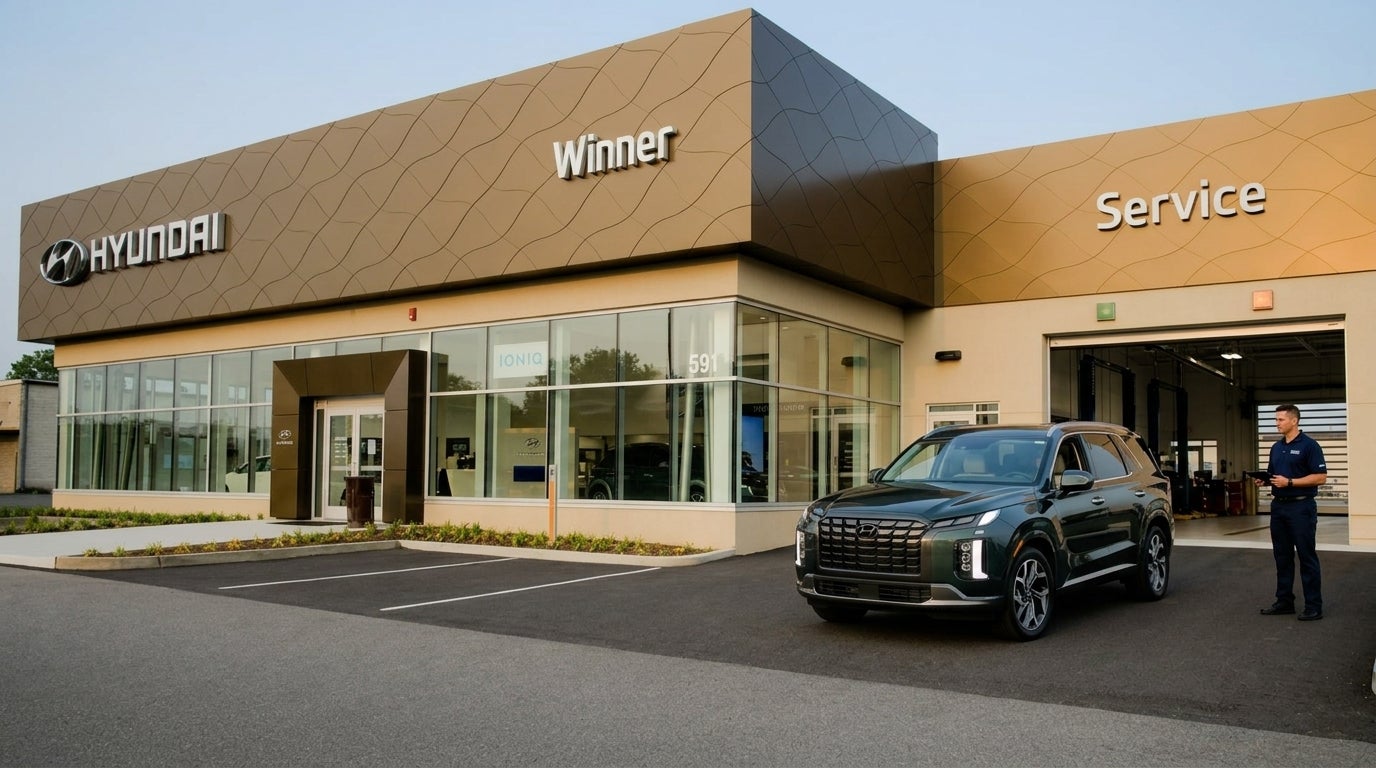
Authorized Hyundai service, genuine OEM replacement parts, and factory-certified repair technicians in central Delaware are located at Winner Hyundai, situated at 591 S Dupont Hwy, Dover, DE 19901. Vehicle owners can reach our service department directly by calling (302) 497-3620 or contact the parts counter directly at (302) 497-3621.

Our facility operates during convenient weekly and weekend hours to accommodate busy work schedules:

  • Service Department Hours: Monday through Friday from 7:30 AM to 6:00 PM; Saturday from 8:00 AM to 5:00 PM; Closed Sunday.
  • Parts Department Hours: Monday through Friday from 7:30 AM to 5:00 PM; Saturday from 8:00 AM to 5:00 PM; Closed Sunday.
  • Main Dealership Line: Reach our customer support team at (302) 877-2489 for general inquiries.

Drivers commuting past the low-lying wetland corridors near Milford often experience moisture accumulation that accelerates brake pin oxidation and rotor corrosion, making regular factory inspections essential. To keep vehicle maintenance affordable, our dealership publishes monthly current offers online for oil changes, brake rotor resurfacing, battery replacements, and cabin filter services. You can easily schedule certified Hyundai service online to reserve a dedicated service bay with our factory-trained team.


Frequently Asked Questions About Hyundai Maintenance

Q: How often should synthetic engine oil be changed in a Hyundai?

Under normal driving conditions, Hyundai recommends full-synthetic engine oil changes every 7,500 miles or 12 months. Vehicles operated under severe conditions—such as frequent short trips under 10 miles, extended idling, driving in dusty environments, or towing—require shorter intervals of 3,750 to 5,000 miles or 6 months to prevent internal oil sludge buildup.

Q: Does Hyundai Complimentary Maintenance transfer to a second owner?

Hyundai Complimentary Maintenance applies strictly to the original retail purchaser or lessee and is non-transferable, with an exception allowed for transfers between spouses. Pre-owned buyers do, however, retain any remaining balance of the 5-year / 60,000-mile new vehicle limited warranty when purchasing a eligible vehicle.

Q: What engine oil viscosity and specification does Hyundai recommend?

Most recent Hyundai gasoline engines specify full-synthetic SAE 0W-20 engine oil meeting API SP or GF-6 industry standards. Using correct factory-spec oil maintains internal engine tolerances, optimizes cold-weather startup lubrication, and preserves fuel efficiency.

Q: How often should Hyundai brake fluid and filters be replaced?

Factory maintenance guidelines recommend replacing brake fluid every 2 to 3 years regardless of mileage because brake fluid absorbs atmospheric moisture over time. Cabin air micro-filters require replacement every 15,000 miles, while engine air filters should be replaced every 30,000 miles under normal driving.

Q: How does Hyundai 24/7 Roadside Assistance work during a breakdown?

Included with new Hyundai vehicles for 5 years / unlimited miles, Hyundai Roadside Assistance provides emergency towing to the nearest authorized dealer, battery jump-starts, flat tire changes, lockout assistance, and emergency fuel delivery.


How to Schedule Certified Hyundai Service at Winner Hyundai

Keeping your Hyundai operating safely requires specialized diagnostic tools, Genuine OEM parts, and factory-trained technicians who understand your exact powertrain configuration. Whether your vehicle requires a routine synthetic oil change, a comprehensive multi-point vehicle inspection, or warranty service, scheduling an appointment at Winner Hyundai takes only a few moments online or by phone. Our modern service center at 591 S Dupont Hwy, Dover, DE 19901 features comfortable customer amenities, complimentary Wi-Fi, and private work stations while certified technicians service your vehicle.

To reserve your next service date, get step-by-step directions to Winner Hyundai or give our service desk a quick call at (302) 877-2489 to confirm availability today.


© 2026 Winner Hyundai. All rights reserved.

Posted in:

Related Posts

Winner Hyundai Service Exterior

Where Can You Find Certified Hyundai Service in Dover?

Authorized Hyundai service in Dover is available at Winner Hyundai, located at 591 S Dupont Hwy, Dover, DE 19901. Our dealership operates a certified service center staffed by factory-trained technicians equipped with genuine OEM parts and specialized diagnostic tools. Drivers can get complete maintenance and repair services by visiting our service center location or giving a quick call to our service team to confirm availability. Maintaining a Hyundai according to factory standards requires specialized diagnostic software, calibrated service equipment, and component replacement using original parts. At our Dover facility, every repair and maintenance procedure adheres to manufacturer specifications to protect vehicle reliability, performance, and warranty coverage. Factory-certified technicians undergo continuous training on the latest powertrain, electrical, and driver-assistance systems across the entire lineup. Choosing an authorized service facility ensures that your vehicle receives component updates, technical service bulletin checks, and official safety recall repairs at no cost. Independent repair shops typically lack direct access to Hyundai factory software updates, proprietary repair databases, and original manufacturer equipment designed specifically for your model year. Our facility includes dedicated service bays, a fully stocked inventory of genuine OEM parts, and a comfortable customer lounge equipped with complimentary Wi-Fi, refreshments, and modern seating while your vehicle is serviced. Table of Contents What Routine Maintenance Options and Repairs Are Available at Winner Hyundai? How Often Should You Schedule Oil Changes and Multi-Point Inspections? What Does Hyundai Complimentary Maintenance Include and What Is Excluded? What Is Covered Under Hyundai's High-Voltage EV Battery Warranty? How Do You Schedule an Appointment and What Are the Service Center Hours? Common Questions About Maintaining Your Hyundai Keep Your Vehicle Running Smoothly at Winner Hyundai What Routine Maintenance Options and Repairs Are Available at Winner Hyundai? Winner Hyundai provides complete vehicle care, ranging from essential fluid exchanges and brake rebuilds to complex electronic diagnostic troubleshooting. Our service menu covers every routine milestone needed to maintain vehicle safety, longevity, and efficiency over years of driving. Standard scheduled services and mechanical repair procedures offered at our facility include: Synthetic engine oil changes and filter replacements Four-wheel tire rotations, computerized balancing, and wheel alignments Front and rear brake pad replacement, rotor resurfacing, and fluid flushes Engine air filter and cabin micro-filter changes 12-volt vehicle battery health testing and terminal cleaning Transmission fluid inspection, cooling system flushes, and spark plug replacement Factory recall service and technical software updates Daily driving across varied local terrain places distinct mechanical demands on key components. Commuters driving in from Milford along agricultural routes and secondary roads often experience elevated dust exposure and frequent brake application, making regular air filter checks and brake pad inspections critical to vehicle health. Using genuine OEM replacement parts ensures precise fitment, structural integrity, and proper heat dissipation compared to aftermarket alternatives. Whether your vehicle requires routine upkeep or extensive engine diagnostics, scheduling a service appointment online reserves time with certified technicians who understand your exact powertrain configuration. How Often Should You Schedule Oil Changes and Multi-Point Inspections? Modern Hyundai gas-powered vehicles require synthetic engine oil changes every 7,500 miles or 12 months under normal driving conditions, while severe driving conditions require service every 5,000 miles or 6 months. Every oil change should be paired with a tire rotation and a detailed multi-point vehicle inspection. Engine oil lubricates high-speed mechanical components, reduces friction, and absorbs combustion heat within the cylinder head and block. Over time, heat cycles break down chemical additives in the oil, while microscopic metal debris and carbon deposits accumulate. Following the recommended service interval prevents sludge buildup and protects internal components from premature wear. Severe driving conditions alter standard service schedules. Qualifying severe conditions include short trips under 10 miles, extended engine idling, driving in dusty or sandy environments, towing a trailer, and frequent stop-and-go stoplight traffic. To keep maintenance affordable, vehicle owners can review our current service offers and oil change information prior to booking their visit. A multi-point inspection performed during routine service acts as an early warning system for wear items. Technicians evaluate brake pad thickness, tire tread depth, suspension bushings, drive belts, engine hoses, battery cold-cranking amps, and fluid levels to detect minor issues before they lead to unexpected breakdowns. Service Item Normal Driving Interval Severe Driving Interval Synthetic Oil & Filter Change 7,500 miles or 12 months 5,000 miles or 6 months Tire Rotation 7,500 miles or 12 months 5,000 miles or 6 months Engine Air Filter Replacement 30,000 miles or 36 months 15,000 miles or 24 months Cabin Air Filter Replacement 15,000 miles or 12 months 10,000 miles or 12 months Brake Inspection 7,500 miles or 12 months 5,000 miles or 6 months What Does Hyundai Complimentary Maintenance Include and What Is Excluded? Hyundai Complimentary Maintenance covers standard factory-scheduled engine oil changes, oil filter replacements, tire rotations, and multi-point inspections for 3 years or 36,000 miles, whichever comes first. This program applies to new original retail buyers and includes up to four basic maintenance services for 2025 model year vehicles when performed at an authorized service center. This complimentary protection program lowers early ownership costs by covering essential maintenance intervals outlined in the owner's manual. Each service must be redeemed within 1,000 miles or one month of the designated interval to remain eligible under program terms. Normal wear-and-tear items and severe-service maintenance needs are excluded from complimentary coverage. Excluded items that remain the owner's financial responsibility include: Front and rear brake pad replacement and rotor servicing Windshield wiper blade refills Cabin micro-filters and engine air filters Tire replacement, puncture repairs, and wheel alignments Mechanical damage resulting from severe driving conditions or neglected upkeep Service items classified under manual guidelines as "inspect only" — such as fuel lines, steering gearboxes, and suspension ball joints — carry no labor coverage under the complimentary program if additional adjustment or replacement is required. What Is Covered Under Hyundai's High-Voltage EV Battery Warranty? Hyundai's high-voltage lithium-ion EV battery pack is covered against manufacturing defects and excessive capacity loss under a 10-year/100,000-mile EV high-voltage battery warranty for original owners. This coverage guarantees that the traction battery retains its operational capability throughout the active warranty period. Electric vehicles require less mechanical upkeep than internal combustion cars because they lack engine oil, spark plugs, timing belts, and complex multi-ratio transmissions. However, routine maintenance remains vital for chassis systems, thermal management systems, high-voltage battery coolant, cabin air quality, and braking hardware. Coastal driving in coastal areas such as Lewes introduces salt air and moisture, which accelerates surface oxidation on exposed brake slide pins and rotors. Because EV regenerative braking handles most stopping force, mechanical brake pads are used less frequently, making periodic brake slider lubrication and visual pad inspections essential during tire rotations. EV service visits focus on monitoring battery module cell balance through diagnostic software, inspecting high-voltage wiring harnesses, flushing low-conductivity battery coolant according to manual intervals, and rotating tires to manage the instant torque produced by electric motors. How Do You Schedule an Appointment and What Are the Service Center Hours? Service appointments at Winner Hyundai can be booked online through our direct scheduling portal, via the MyHyundai mobile app, or by calling our service advisors directly during business hours. Online booking allows drivers to select their preferred service advisor, specify vehicle concerns, pick an open calendar slot, and request loaner transportation if necessary. Our service department operates during the following weekly hours: Monday through Friday: 7:30 AM to 6:00 PM Saturday: 8:00 AM to 5:00 PM Sunday: Closed The parts department operates Monday through Friday from 7:30 AM to 5:00 PM and Saturday from 8:00 AM to 5:00 PM. Drivers visiting for fast maintenance procedures can relax in our customer waiting lounge, which offers clean amenities, high-speed Wi-Fi, private work stations, hot coffee, and light snacks. Drivers scheduled for routine maintenance frequently reserve Saturday morning time slots to complete their vehicle upkeep alongside weekend errands. Common Questions About Maintaining Your Hyundai Q: How do you verify if your vehicle has an open safety recall? Check open safety recalls by entering your vehicle's 17-digit Vehicle Identification Number (VIN) into the official National Highway Traffic Safety Administration recall search tool or Hyundai's online owner portal. Open safety recalls must be performed by an authorized dealership at zero cost to the owner. Contacting (302) 877-2489 lets our team look up your VIN directly in factory software, reserve required recall repair parts, and set an appointment to complete the service. Q: What is the difference between powertrain warranty coverage and basic bumper-to-bumper protection? Hyundai covers new vehicles with a 5-year/60,000-mile limited basic warranty and a 10-year/100,000-mile limited powertrain warranty for original owners. Basic coverage protects most vehicle components, electronics, and body systems against manufacturing defects. Powertrain coverage specifically protects internally lubricated engine components, transmission internal gears, drive shafts, axles, and differential assemblies against structural mechanical failure. Normal maintenance and wear items like brake pads, tires, and oil changes are excluded from both warranty plans. Q: Can remote diagnostics and vehicle health monitoring be tracked through Blue Link? Connected Hyundai models equipped with active telematics send real-time diagnostic trouble codes, maintenance reminders, and system health status reports directly to your mobile device. When a dashboard warning light illuminates, onboard diagnostics evaluate the issue and transmit alert details to your phone. Owners using Hyundai Blue Link technology features can schedule service visits directly through the smartphone application, allowing service advisors to view diagnostic fault codes before your vehicle arrives in the service bay. Q: What seasonal vehicle maintenance is recommended for Mid-Atlantic weather extremes? Delaware weather exposes vehicles to freezing winter slush, salt, and humid summer heat. Pre-winter maintenance should prioritize 12-volt battery cold-cranking capacity tests, windshield washer anti-freeze fluid top-offs, wiper blade replacements, and tire tread depth checks for wet traction. Summer preparation requires testing air conditioning compressor efficiency, inspecting engine cooling hoses, checking coolant freeze-point protection, and verifying correct tire inflation pressures as temperatures rise. Q: Where can factory-scheduled complimentary maintenance be redeemed? Hyundai Complimentary Maintenance services must be redeemed at an authorized Hyundai dealership service department. Independent repair facilities and third-party quick-lube shops cannot bill or process complimentary program claims. Bringing your vehicle to our Dover facility ensures that maintenance records register in Hyundai's national database, preserving your factory warranty rights and verifying vehicle history for future resale value. Keep Your Vehicle Running Smoothly at Winner Hyundai Staying current with factory-recommended maintenance intervals protects your vehicle's engine performance, safety systems, and overall resale value over time. Whether you require a basic synthetic oil change, a multi-point inspection, or specialized recall repairs, our certified team is equipped to deliver prompt, expert care. Reserve your preferred service date online today or contact our service advisors directly to keep your Hyundai driving at its best. © 2026 Winner Hyundai. All rights reserved. { "@context": "https://schema.org", "@graph": [ { "@type": "NewsArticle", "@id": "#article", "headline": "Where Can You Find Certified Hyundai Service in Dover?", "datePublished": "2026-09-15T17:41:16.230Z", "dateModified": "2026-09-15T17:42:49.035Z", "author": { "@id": "#author" }, "publisher": { "@id": "#dealer" }, "wordCount": 1834, "description": "Discover certified Hyundai service options in Dover, DE, offering factory-trained technicians, genuine OEM parts, and complete vehicle maintenance." }, { "@type": "AutoDealer", "@id": "#dealer", "name": "Winner Hyundai", "url": "https://www.winnerhyundai.com", "telephone": "+13028772489", "sameAs": [ "https://www.facebook.com/WinnerHyundai", "https://www.instagram.com/winner_hyundai", "https://maps.google.com/?cid=7835485807314643911" ], "address": { "@type": "PostalAddress", "streetAddress": "591 S Dupont Hwy", "addressLocality": "Dover", "addressRegion": "DE", "postalCode": "19901", "addressCountry": "US" }, "areaServed": { "@type": "GeoCircle", "geoMidpoint": { "@type": "GeoCoordinates", "latitude": "39.1526642", "longitude": "-75.5136308" }, "geoRadius": "48280" }, "geo": { "@type": "GeoCoordinates", "latitude": "39.1526642", "longitude": "-75.5136308" }, "openingHours": [ "Mo 09:00-20:00", "Tu 09:00-20:00", "We 09:00-20:00", "Th 09:00-20:00", "Fr 09:00-20:00", "Sa 09:00-18:00" ] }, { "@type": "FAQPage", "@id": "#faq", "mainEntity": [ { "@type": "Question", "name": "How do you verify if your vehicle has an open safety recall?", "acceptedAnswer": { "@type": "Answer", "text": "Check open safety recalls by entering your vehicle's 17-digit Vehicle Identification Number (VIN) into the official National Highway Traffic Safety Administration recall search tool or Hyundai's online owner portal. Open safety recalls must be performed by an authorized dealership at zero cost to the owner. Contacting (302) 877-2489 lets our team look up your VIN directly in factory software, reserve required recall repair parts, and set an appointment to complete the service." } }, { "@type": "Question", "name": "What is the difference between powertrain warranty coverage and basic bumper-to-bumper protection?", "acceptedAnswer": { "@type": "Answer", "text": "Hyundai covers new vehicles with a 5-year/60,000-mile limited basic warranty and a 10-year/100,000-mile limited powertrain warranty for original owners. Basic coverage protects most vehicle components, electronics, and body systems against manufacturing defects. Powertrain coverage specifically protects internally lubricated engine components, transmission internal gears, drive shafts, axles, and differential assemblies against structural mechanical failure. Normal maintenance and wear items like brake pads, tires, and oil changes are excluded from both warranty plans." } }, { "@type": "Question", "name": "Can remote diagnostics and vehicle health monitoring be tracked through Blue Link?", "acceptedAnswer": { "@type": "Answer", "text": "Connected Hyundai models equipped with active telematics send real-time diagnostic trouble codes, maintenance reminders, and system health status reports directly to your mobile device. When a dashboard warning light illuminates, onboard diagnostics evaluate the issue and transmit alert details to your phone. Owners using Hyundai Blue Link technology features can schedule service visits directly through the smartphone application, allowing service advisors to view diagnostic fault codes before your vehicle arrives in the service bay." } }, { "@type": "Question", "name": "What seasonal vehicle maintenance is recommended for Mid-Atlantic weather extremes?", "acceptedAnswer": { "@type": "Answer", "text": "Delaware weather exposes vehicles to freezing winter slush, salt, and humid summer heat. Pre-winter maintenance should prioritize 12-volt battery cold-cranking capacity tests, windshield washer anti-freeze fluid top-offs, wiper blade replacements, and tire tread depth checks for wet traction. Summer preparation requires testing air conditioning compressor efficiency, inspecting engine cooling hoses, checking coolant freeze-point protection, and verifying correct tire inflation pressures as temperatures rise." } }, { "@type": "Question", "name": "Where can factory-scheduled complimentary maintenance be redeemed?", "acceptedAnswer": { "@type": "Answer", "text": "Hyundai Complimentary Maintenance services must be redeemed at an authorized Hyundai dealership service department. Independent repair facilities and third-party quick-lube shops cannot bill or process complimentary program claims. Bringing your vehicle to our Dover facility address ensures that maintenance records register in Hyundai's national database, preserving your factory warranty rights and verifying vehicle history for future resale value." } } ] } ] }
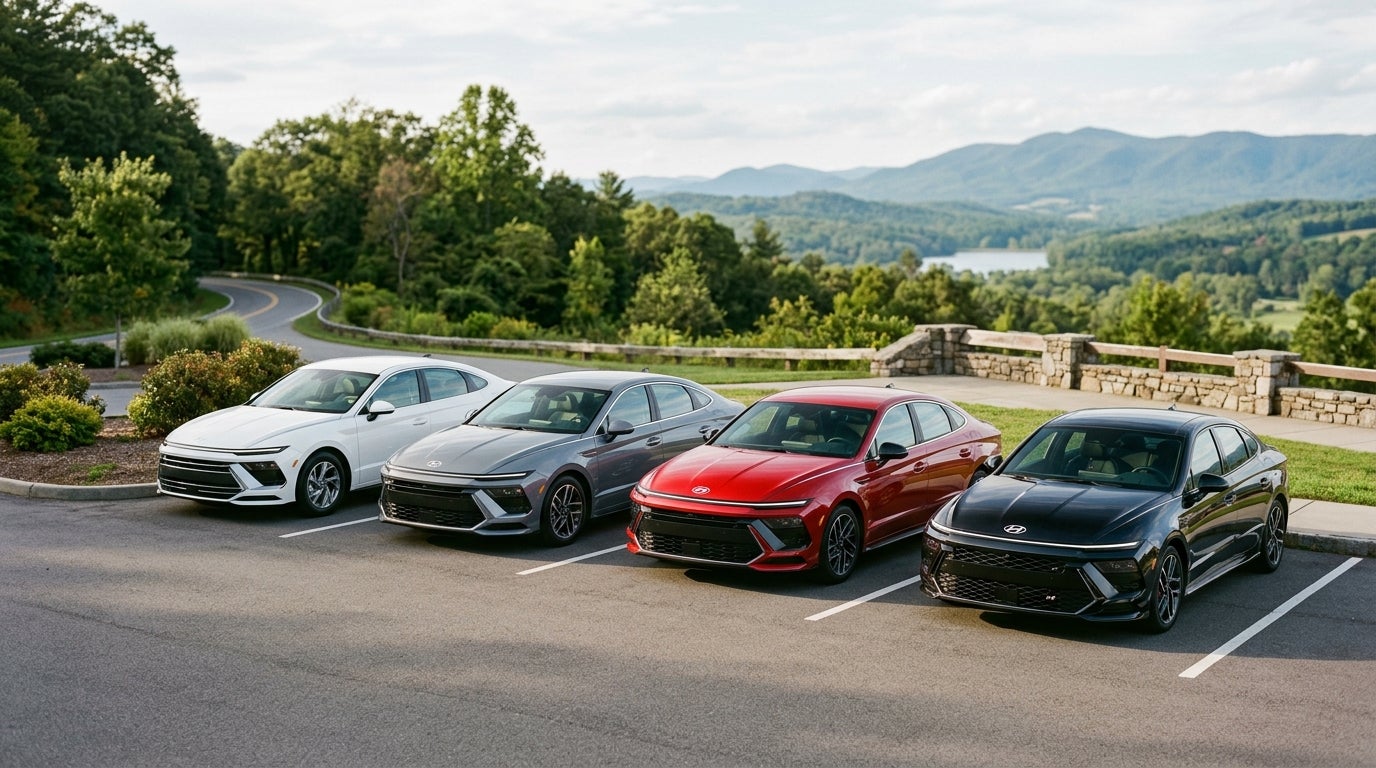
Four Hyundai Sonata sedans in white, grey, red, and black parked at a scenic overlook with mountain views. (Representative image for illustration purposes only. Actual vehicle may vary based on trim and configuration.)

2026 Hyundai Sonata: SE, SEL, SEL Sport, and N Line Guide

The 2026 Hyundai Sonata makes a compelling case that the mid-size sedan still has plenty to offer in an era dominated by crossovers. This guide covers every trim available at Winner Hyundai — the SE, SEL, SEL Sport, and performance-focused N Line — walking through powertrain choices, cabin comfort, technology, safety, pricing, and ownership costs so you can walk onto the lot knowing exactly what you want. more Table of Contents Distinctive Exterior Styling and Design Elements of the 2026 Hyundai Sonata Performance Insights: Engines, Horsepower, and Driving Dynamics of the 2026 Hyundai Sonata Comfort and Convenience: Inside the 2026 Hyundai Sonata's Cabin Advanced Technology and Infotainment Features in the 2026 Hyundai Sonata Comprehensive Safety and Driver Assistance Systems in the 2026 Hyundai Sonata Breaking Down the 2026 Hyundai Sonata Trim Levels and Pricing Warranty Coverage, Maintenance Plans, and Service Options for the 2026 Hyundai Sonata Awards and Expert Reviews Highlighting the 2026 Hyundai Sonata's Strengths Common Buyer Questions About the 2026 Hyundai Sonata Answered Evaluating the 2026 Hyundai Sonata's Value and Ownership Experience Why the 2026 Hyundai Sonata Captivates Mid-Size Sedan Buyers Sedans have been quietly staging a comeback, and the 2026 Hyundai Sonata is one of the strongest arguments for why. While much of the automotive market has pivoted toward crossovers, the Sonata holds its ground by delivering a lower-slung driving posture, a quieter highway ride, and a fastback silhouette that reviewers at The Car Connection describe as "style-forward, efficient, and feature-rich" — a car that "finds a way to stand out in a crowded field." The Sonata's lineup is structured to serve genuinely different buyers. The SE is an accessible entry point packed with more technology than you might expect at its price. The SEL and SEL Sport step up comfort and connectivity without a dramatic price jump. And the N Line is a genuine performance sedan, something Edmunds notes the segment has largely abandoned — making it a rare find for drivers who want spirited dynamics in a practical, five-passenger package. What holds the lineup together is Hyundai's commitment to standard safety technology and a rich infotainment experience across every trim. Whether you're cross-shopping against the Toyota Camry, Honda Accord, Kia K5, or Nissan Altima, the Sonata consistently punches above its price point. Hyundai backs the Sonata with a strong ownership package — you can review the full Hyundai warranty coverage before you buy — and Winner Hyundai makes financing straightforward whether you prefer to get credit approval online or start a pre-approval application at your own pace. If you'd like to understand what sets Winner Hyundai apart from other local dealerships, learn more about what makes us different. Distinctive Exterior Styling and Design Elements of the 2026 Hyundai Sonata The 2026 Sonata's exterior is one of the most visually distinct in its class. Hyundai's design team leaned into a fastback-inspired roofline that flows cleanly into a short rear deck, giving the car a silhouette that reads more like a concept vehicle than a conventional family sedan. The Seamless Horizon LED daytime running lights stretch across the front fascia in a single unbroken band, creating an instantly recognizable face that is especially striking at dusk. All four trims ride on alloy wheels, but the N Line receives an exclusive treatment: 19-inch N Design aluminum alloy wheels wrapped in 245/40R19 performance tires, paired with N Line-specific front and rear fascias, gloss black outside mirrors, a rear lip spoiler, and quad exhaust tips that make the performance intent unmistakable from any angle. The SE uses 16-inch wheels with 205/65R16 all-season tires, while the SEL and SEL Sport move up to 18-inch aluminum alloy wheels with P235/45R18 all-season rubber — a meaningful visual upgrade that also improves cornering composure. The N Line adds bi-functional LED projection headlights and an acoustic-laminated windshield as standard equipment, features that distinguish it further from the naturally aspirated trims. The SEL goes a step further on the exterior with heated, power-folding side mirrors that include integrated turn-signal indicators — a detail that matters in tight parking situations. Premium paint options are available across all four trims. Shoppers can add Serenity White Pearl or Ultimate Red Metallic for $500 each, giving the Sonata a more personalized presence on the road. The hands-free smart trunk release — which pops the lid automatically when you approach with the proximity key — is standard on both the N Line and SEL Sport, adding a practical convenience that daily drivers will appreciate quickly. If you're drawn to the sportier aesthetic but are also considering an SUV, it's worth checking current Santa Fe Sport offers to compare the two directions before deciding. ​ Performance Insights: Engines, Horsepower, and Driving Dynamics of the 2026 Hyundai Sonata The single most important spec decision in the 2026 Sonata lineup is the powertrain choice, because it determines not just how the car drives but also how it sips fuel. The SE, SEL, and SEL Sport share a naturally aspirated 2.5L Smartstream GDI/MPI four-cylinder producing 191 hp and 181 lb-ft of torque, routed through an 8-speed automatic transmission with SHIFTRONIC sequential shift capability. The N Line is a fundamentally different machine: its 2.5L turbocharged GDI/MPI four-cylinder generates 290 hp and 311 lb-ft of torque, paired with an N 8-speed wet dual-clutch transmission featuring paddle shifters, rev-matching capability, and launch control. That's a 99-horsepower gap between the N Line and every other trim in this coverage group — a difference you feel immediately from the first throttle input. The N Line's wet DCT deserves particular attention. Unlike a conventional torque-converter automatic, a wet DCT uses two clutch packs bathed in oil for cooling, enabling near-instantaneous gear changes without the torque interruption of a dry clutch system. Paired with a sport-tuned suspension and rack-mounted motor-driven power steering (R-MDPS), the N Line communicates road texture more directly to the driver and resists body roll through corners in a way that the standard 8-speed automatic trims simply don't replicate. The N Line also offers five drive modes — Eco, Normal, Sport, Sport+, and Custom — letting drivers dial in everything from relaxed cruising to more spirited driving. The naturally aspirated trims are no slouches for daily use. The 8-speed automatic shifts smoothly and responds well to the SHIFTRONIC paddle inputs, and the SEL Sport adds Drive Mode Select as standard, giving that trim a sportier character than the base SE. Fuel economy diverges noticeably across the lineup: Feature N Line SE SEL SEL Sport MPG 23 city / 32 hwy / 27 combined 28 city / 38 hwy / 32 combined 25 city / 36 hwy / 29 combined 25 city / 36 hwy / 29 combined The SE is the efficiency leader at 28 city / 38 hwy / 32 combined, making it an outstanding choice for commuters who prioritize fuel savings. The SEL and SEL Sport trade a modest amount of efficiency for added equipment, returning 25/36/29. The N Line is the least efficient at 23/32/27 — an expected trade-off for 290 hp. ​ Comfort and Convenience: Inside the 2026 Hyundai Sonata's Cabin Step inside any 2026 Sonata and the first thing you notice is the space. All four trims seat five passengers and share an identical about 16 cu ft of trunk space — competitive for the mid-size class and large enough for a family road trip's worth of luggage. The 60/40 split-folding rear seat (standard on the N Line) expands cargo flexibility further when you need it. The SE keeps things practical with premium cloth seating surfaces, manual air conditioning, and proximity key entry with push-button start. It's a well-equipped base that doesn't feel spartan. The SEL upgrades meaningfully: heated front seats, an 8-way power-adjustable driver's seat with power lumbar support, a leather-wrapped steering wheel, dual-zone automatic climate control, and heated power-folding side mirrors with turn-signal indicators all come standard. The SEL Sport matches the SEL's interior comfort package, adding the column-mounted shift-by-wire electronic shifter and paddle shifters as standard. The N Line takes a different approach to interior character. Rather than simply adding luxury touches, it outfits the cabin with N Unique sport seats upholstered in microfiber suede and H-Tex leatherette combinations with red contrast stitching and embossed N logos. The bolstering is noticeably more aggressive than the standard seats, holding occupants in place during spirited cornering. The N Line also adds 64-color ambient interior lighting, an auto-dimming inside rearview mirror, and a column-mounted shift-by-wire gear selector — features that give the cabin a premium feel that punches well above the trim's price point. Across all four trims, dual front and rear USB-C ports keep devices charged for all passengers. The SEL and SEL Sport add a Qi wireless charging pad, eliminating cable clutter for compatible smartphones. Electronic Parking Brake with Auto Hold is standard on the SE, a small but genuinely useful feature that holds the car on a hill without requiring constant brake pedal pressure. ​ Advanced Technology and Infotainment Features in the 2026 Hyundai Sonata A 12.3-inch touchscreen infotainment display is standard across all four trims — a screen size that many luxury vehicles charged extra for just a few years ago. Wireless Apple CarPlay and Android Auto integration comes standard on every Sonata in this group, meaning you never need a cable to mirror your phone's navigation, music, or messaging apps. Dual front and rear USB-C ports are present on all trims, and the SEL, SEL Sport, and N Line add a Qi wireless charging pad. The N Line raises the technology ceiling considerably. Its panoramic curved display pairs the 12.3-inch touchscreen with a matching 12.3-inch digital instrument cluster in a single seamless unit that sweeps across the dashboard. The Bose Premium 12-Speaker Audio System — featuring Bose Centerpoint surround sound processing and a dedicated subwoofer — comes standard on the N Line, calibrated specifically for the Sonata's cabin geometry. The SEL Sport, by contrast, uses a 6-speaker audio system, so audiophiles comparing those two trims should factor that difference into their decision. Bluelink+ Connected Car Services are standard on all four trims, giving owners remote start, lock/unlock, vehicle status monitoring, and over-the-air software update capability from a smartphone app. The N Line adds Hyundai Digital Key 2 Premium, which uses Ultra-Wideband and NFC technology to let compatible smartphones and smartwatches serve as the vehicle key — no physical fob required. The SEL also includes OTA software update capability and remote engine start through the proximity key system. For buyers who want to understand how Hyundai's connected services work in depth, our Bluelink feature overview explains the full capability set. ​ Comprehensive Safety and Driver Assistance Systems in the 2026 Hyundai Sonata The 2026 Sonata earned a TOP SAFETY PICK+ designation from the Insurance Institute for Highway Safety — the highest recognition IIHS awards — validating Hyundai's commitment to structural integrity and crash avoidance across the lineup. Every trim in this group carries a nine-airbag safety system that includes advanced dual front airbags with an Occupant Classification System, front seat-mounted side-impact airbags, rear side-impact airbags, side curtain airbags covering both rows, and a driver's knee airbag. That last item matters: in a frontal collision, the knee airbag prevents the driver's legs from sliding under the dashboard, reducing lower-extremity injury risk significantly. The active safety suite is equally thorough. Forward Collision-Avoidance Assist with Pedestrian, Cyclist, and Junction-Turning Detection is standard on all four trims, scanning for threats in urban intersections where traditional forward-collision systems often miss turning vehicles. Lane Keeping Assist, Lane Following Assist, Blind-Spot Collision Warning, Rear Cross-Traffic Collision-Avoidance Assist, Smart Cruise Control with Stop & Go, Driver Attention Warning, Safe Exit Warning, Rear Occupant Alert, and High Beam Assist are all standard across the SE, SEL, SEL Sport, and N Line. The N Line adds Highway Driving Assist, which provides semi-autonomous lane-centering and adaptive speed control on mapped interstates — a meaningful upgrade for frequent highway drivers. Electronic Stability Control, Traction Control, four-wheel ABS with Electronic Brake-Force Distribution, Brake Assist, Vehicle Stability Management, Hillstart Assist Control, and a tire-specific TPMS with individual tire indicators round out the passive and active safety architecture. Shoppers who want to experience these systems firsthand can schedule a test drive at Winner Hyundai. Buyers with specific mobility needs should also review our mobility assistance program for available support options. ​ Breaking Down the 2026 Hyundai Sonata Trim Levels and Pricing Understanding where each trim sits in the lineup helps narrow the decision quickly. The SE is the volume entry point, the SEL and SEL Sport occupy the same price tier but offer different personalities, and the N Line is a performance-focused premium trim with a distinct powertrain. Feature N Line SE SEL SEL Sport Base MSRP $36,050 $27,450 $29,150 $29,150 All trims share a destination charge of $1,245. The powertrain split is the most consequential difference between the N Line and the rest: Feature N Line SE SEL SEL Sport Horsepower 290 hp 191 hp 191 hp 191 hp Torque 311 lb-ft 181 lb-ft 181 lb-ft 181 lb-ft Transmission 8-speed wet DCT 8-speed automatic 8-speed automatic 8-speed automatic All trims share: Engine: 2.5L · Drivetrain: Front-wheel drive The SE at $27,450 is the entry trim, delivering wireless CarPlay/Android Auto, Smart Cruise Control with Stop & Go, the full active safety suite, and a 12.3-inch touchscreen — a remarkable package at that price point. The SEL at $29,150 adds heated front seats, dual-zone automatic climate control, an 8-way power driver's seat with lumbar support, a leather-wrapped steering wheel, heated power-folding mirrors, and wireless charging. The SEL Sport shares the SEL's price but substitutes a sportier character through Drive Mode Select, paddle shifters, and the panoramic curved dual-screen display. The N Line at $36,050 is a different product category entirely. Its turbocharged engine, wet DCT, sport-tuned suspension, R-MDPS steering, 19-inch performance wheels, Bose 12-speaker audio, panoramic sunroof, Digital Key 2 Premium, Highway Driving Assist, and 64-color ambient lighting represent a level of standard equipment that would cost significantly more in most competing nameplates. Dimensions and Cargo Capacity by Trim Feature N Line SE SEL SEL Sport Curb weight 3,534 lbs 3,232 lbs 3,305 lbs 3,305 lbs All trims share: Seating: 5 · Cargo: about 16 cu ft The N Line's 302-pound weight premium over the SE reflects its turbocharged drivetrain and additional standard equipment. The SEL and SEL Sport sit in between at 3,305 lbs each. ​ Warranty Coverage, Maintenance Plans, and Service Options for the 2026 Hyundai Sonata Hyundai's ownership package has long been one of the brand's strongest competitive advantages, and the 2026 Sonata is no exception. Hyundai provides a comprehensive warranty structure covering the vehicle's powertrain and major systems — contact Winner Hyundai directly for specific term details, or review the complimentary maintenance benefits that come with new Hyundai ownership. Winner Hyundai's service department handles everything from routine oil changes and tire rotations to more involved brake and drivetrain work. You can schedule your next service visit online, or use our service appointment booking tool to pick a time that fits your schedule. Before your visit, it's worth checking current service coupons and parts and service specials to reduce out-of-pocket costs. Tire service is a common need on performance-spec trims like the N Line's 245/40R19 rubber — you can save on tire service with available promotions. For owners who want to protect their investment beyond the factory warranty, Winner Hyundai offers extended vehicle protection plans worth exploring at the time of purchase. Staying on top of scheduled maintenance is straightforward with our recommended maintenance schedule guide, which outlines service intervals for the Sonata's specific drivetrain configurations. When brake service is needed, our certified technicians provide expert brake inspection and repair using Hyundai-approved components. ​ Awards and Expert Reviews Highlighting the 2026 Hyundai Sonata's Strengths Third-party recognition carries weight when evaluating a vehicle purchase, and the 2026 Sonata has earned meaningful accolades. Most notably, the Sonata received the TOP SAFETY PICK+ award from the Insurance Institute for Highway Safety (2026) — the IIHS's highest designation, reserved for vehicles that perform at the top of their class across all crash test categories and earn Superior or Advanced ratings for front crash prevention. Expert reviewers have been equally positive. According to The Car Connection, the 2026 Sonata is "style-forward, efficient, and feature-rich," succeeding as "a practical, yet modern take on the mid-size sedan" that manages to stand out in a competitive field. CarsForSale notes that the Sonata "delivers a balanced driving experience that feels current and carefully dialed in," succeeding by focusing on what mid-size sedan buyers actually need rather than chasing headline performance numbers. Capital One's automotive team describes it as "an impressive midsize car" across technology, safety ratings, available drivetrains, and ownership perks. These assessments align with what Winner Hyundai customers report in their own words. Rachel Lockwood noted that the buying experience at Winner Hyundai was smooth and confidence-inspiring, while Carly Wilson praised the team for making the process "stress-free" and going "above and beyond." ​ Common Buyer Questions About the 2026 Hyundai Sonata Answered What is the best trim for a daily commuter who wants fuel efficiency? The SE is the clear answer. At 28 city / 38 hwy / 32 combined mpg, it leads the lineup in fuel economy by a meaningful margin. It also comes fully equipped with Smart Cruise Control with Stop & Go, wireless CarPlay/Android Auto, and the full active safety suite — everything a commuter needs without the premium price of higher trims. Does the SEL Sport offer all-wheel drive? The SEL Sport is available with an optional HTRAC All-Wheel Drive system, which includes a Snow drive mode and AWD exterior badging, priced at $1,500. The SE, SEL, and N Line are front-wheel drive only. If all-weather traction is a priority, the SEL Sport is the only trim in this group that offers that upgrade. What does the N Line add beyond the standard trims? The N Line is essentially a different vehicle under the hood. Its turbocharged 2.5L engine produces 290 hp and 311 lb-ft of torque versus 191 hp and 181 lb-ft in the other trims. It also gets the N 8-speed wet DCT with launch control, sport-tuned suspension, R-MDPS steering, 19-inch performance wheels, a Bose 12-speaker audio system, panoramic sunroof, Hyundai Digital Key 2 Premium, Highway Driving Assist, and 64-color ambient lighting — all as standard equipment. How does Bluelink+ connected services work? Bluelink+ is standard on all four trims and allows remote vehicle control, status monitoring, and over-the-air software updates through a smartphone app. Our Bluelink overview page covers the full feature set in detail. Are there special purchase programs available? Recent graduates may qualify for additional benefits through Hyundai's college graduate rebate program. Winner Hyundai also has programs for military members, first responders, and customers with specific mobility needs — ask a team member for current eligibility details. What cargo and accessory packages are available? The SE, SEL, and N Line offer a range of dealer-installed accessories including the Cargo Package (cargo tray plus cargo blocks, $160), the Preferred Accessory Package (cargo blocks, first aid kit, and cargo side bins, $160), All-Season Fitted Liners ($250), the Winter Weather Package combining all-season liners and mud guards ($385), and the Severe Weather Kit ($80). The SEL Sport has its own accessory menu including a Protection Package (all-season fitted liners and mud guards, $385) and Cargo Package ($160). ​ Evaluating the 2026 Hyundai Sonata's Value and Ownership Experience The equipment comparison for the 2026 Sonata becomes clearest when you look at what each trim delivers per dollar. The SE at $27,450 includes a 12.3-inch touchscreen, wireless smartphone integration, Smart Cruise Control with Stop & Go, Forward Collision-Avoidance Assist, Blind-Spot Collision Warning, Rear Cross-Traffic Collision-Avoidance Assist, Lane Keeping and Following Assist, a nine-airbag safety system, and Bluelink+ connected services. Comparable equipment on rival sedans often costs more. The SEL at $29,150 adds a $1,700 premium for heated front seats, dual-zone climate control, an 8-way power driver's seat with lumbar, a leather-wrapped steering wheel, wireless charging, and heated power-folding mirrors with turn signals — a package that represents genuine comfort upgrades, not cosmetic ones. The SEL Sport at the same price swaps some of those comfort upgrades for a sportier character through Drive Mode Select, paddle shifters, and the panoramic curved dual-screen display. The N Line at $36,050 is the most straightforward value calculation: 290 hp, a performance-grade wet DCT, a Bose audio system, Highway Driving Assist, a panoramic sunroof, and Digital Key 2 Premium — all standard. Buyers cross-shopping performance sedans from other brands will find it hard to compare that equipment list at a comparable price. Winner Hyundai is located at 591 S Dupont Hwy, Dover, DE 19901. Our team is ready to walk you through any trim, answer questions about available inventory, and help you find the Sonata configuration that fits your budget and lifestyle. Give us (302) 877-2489 to connect with a product specialist before your visit, or stop by at your convenience. The 2026 Sonata rewards a test drive — its driving character, cabin refinement, and technology integration are all best appreciated from the driver's seat. © 2026 Winner Hyundai. All rights reserved.
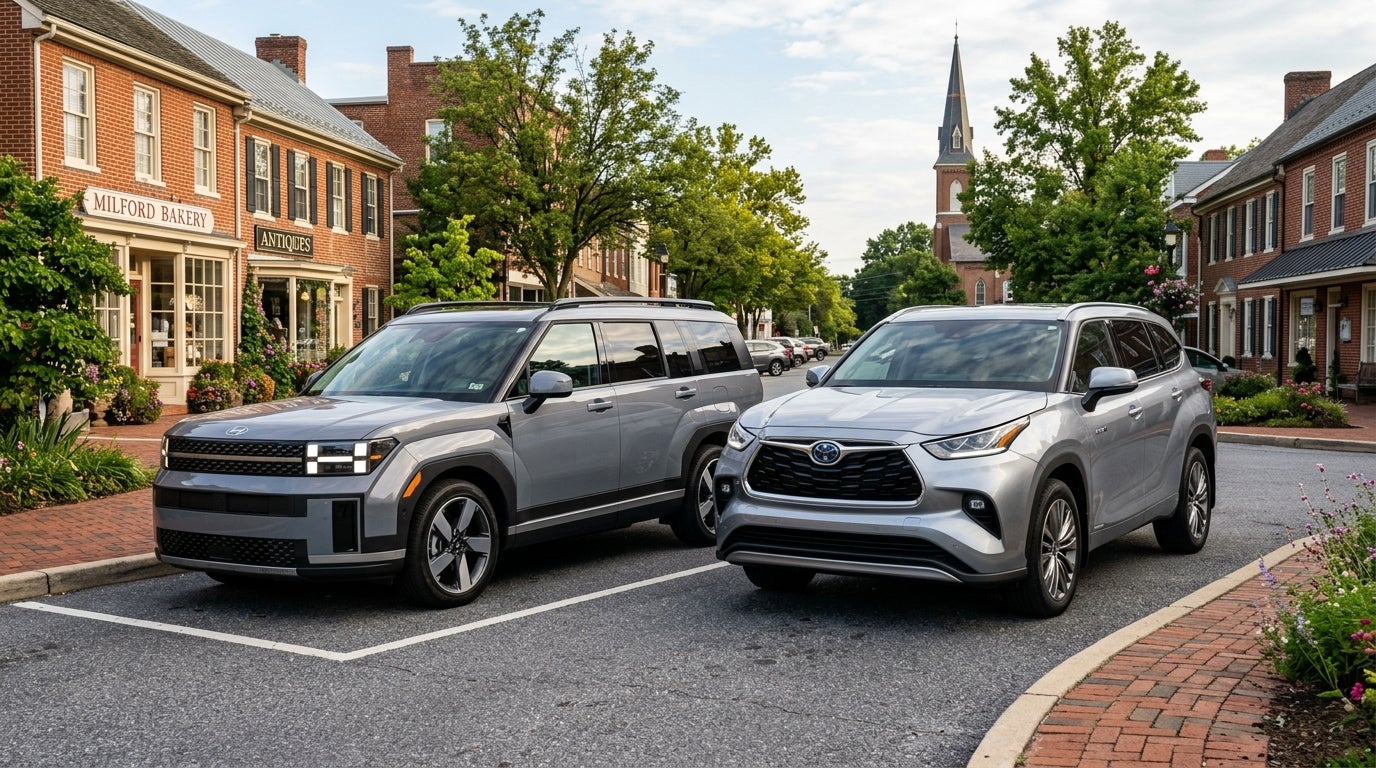
A silver Hyundai Santa Fe and a silver Toyota Highlander SUV parked side by side on a town street. (Representative image for illustration purposes only. Actual vehicle may vary based on trim and configuration.)

Is the 2026 Hyundai Santa Fe Hybrid Better Than the Toyota Highlander Hybrid?

The 2026 Hyundai Santa Fe Hybrid edges out the Toyota Highlander Hybrid by delivering superior standard infotainment technology, greater maximum cargo capacity, and significantly longer warranty protection at a competitive price point. While both three-row crossover SUVs offer excellent fuel economy, the Hyundai Santa Fe Hybrid features a 1.6-liter turbocharged engine paired with a smooth 6-speed automatic transmission, standard dual 12.3-inch displays, and Hyundai’s 10-year/100,000-mile powertrain warranty that easily surpasses Toyota's 5-year/60,000-mile powertrain coverage. more Choosing between these two popular midsize hybrid SUVs comes down to practical everyday utility, cabin comfort, and long-term ownership value. The Hyundai Santa Fe Hybrid generates a combined 231 hp and 271 lb-ft of torque from its hybrid system. By utilizing a conventional 6-speed automatic gearbox rather than a continuously variable transmission, acceleration off the line feels punchy, direct, and linear. In contrast, while the Toyota Highlander Hybrid delivers a comparable 243 horsepower, its electronic CVTs often create engine noise under hard highway merging. In terms of interior space, the Santa Fe Hybrid makes optimal use of its squared-off rear profile. Maximum cargo volume reaches about 80 cubic feet with the second and third rows folded flat, outpacing many rivals in its class. Passengers in the second row benefit from extra legroom thanks to a long wheelbase, making daily carpool duties easy. For commuters traveling along Route 13 from Milford, having a quiet cabin combined with responsive torque makes daily highway driving comfortable and relaxed. When you compare standard amenities, Hyundai includes premium features earlier in the trim lineup than Toyota. Standard dual panoramic screens dominate the dashboard, giving drivers instant access to navigation and media settings without needing expensive option packages. To inspect the cabin layout in person, visit our Dover showroom location or give our team (302) 877-2489 a quick call to check live floor availability. Table of Contents How Do the Santa Fe Hybrid and Toyota Highlander Hybrid Compare in Gas Mileage, Tech, and Infotainment? Which Trim Is Right for You? Comparing the 2026 Santa Fe Hybrid SE, SEL, Limited, and Calligraphy What Are the Reliability Expectations and Maintenance Needs for the 2026 Santa Fe Hybrid? What Are the Recommended Service Intervals for the 2026 Santa Fe Hybrid? Can You Complete the 2026 Hyundai Santa Fe Hybrid Purchase Online Before Visiting the Dealer? Common Buyer Questions About the 2026 Hyundai Santa Fe Hybrid Lineup How Do the Santa Fe Hybrid and Toyota Highlander Hybrid Compare in Gas Mileage, Tech, and Infotainment? The 2026 Hyundai Santa Fe Hybrid achieves up to 37 mpg city / 36 mpg highway with front-wheel drive, closely matching the Toyota Highlander Hybrid's 36 mpg combined rating while offering a dramatically more modern interior display setup. Hyundai equips the Santa Fe Hybrid with standard twin 12.3-inch curved digital screens, whereas base Toyota Highlander trims begin with a smaller 8-inch display. Fuel efficiency remains a primary driver for family buyers choosing a hybrid crossover. The EPA rates front-wheel-drive Santa Fe Hybrid models at 37 mpg city / 36 mpg highway / 36 combined, while all-wheel-drive configurations achieve 35 mpg city / 34 mpg highway / 34 combined. With a total highway cruising range exceeding 600 miles on a single tank of gas, long weekend trips require far fewer fuel stops. Feature / Specification 2026 Hyundai Santa Fe Hybrid Toyota Highlander Hybrid Engine Setup 1.6-liter turbocharged engine + Electric Motor 2.5-liter 4-Cylinder + Electric Motor Total System Output 231 hp / 271 lb-ft 243 hp / 175 lb-ft Transmission 6-speed automatic transmission eCVT FWD Fuel Economy 37 city / 36 hwy / 36 combined 36 city / 35 hwy / 36 combined Standard Touchscreen Dual 12.3-inch Curved Display 8-inch Display (12.3-inch on high trims) Powertrain Warranty 10-year / 100,000-mile warranty 5-year / 60,000-mile warranty Inside the cabin, Hyundai’s infotainment suite sets a high bar for user convenience. Wireless Apple CarPlay and Android Auto come standard across the lineup, allowing seamless smartphone mirroring without messy cords hanging over the center console. Up to six high-speed USB-C charging ports are distributed across all three seating rows, ensuring every passenger keeps their devices powered on long drives. Which Trim Is Right for You? Comparing the 2026 Santa Fe Hybrid SE, SEL, Limited, and Calligraphy Selecting the ideal 2026 Hyundai Santa Fe Hybrid trim depends on your desired balance of price and luxury features, with the new SE trim serving as an accessible entry point, the SEL offering popular convenience upgrades, the Limited adding high-end tech, and the Calligraphy delivering top-tier luxury. Every trim shares the same efficient 231-horsepower hybrid powertrain and responsive handling characteristics. SE: Introduced as a new entry trim for 2026, the SE includes 18-inch alloy wheels, three-row seating, a 12.3-inch center display, and foundational safety tools like Lane Keeping Assist and Smart Cruise Control with Stop & Go. SEL: Adds elevated everyday comfort with H-Tex synthetic leather seating, heated front seats, a hands-free smart power liftgate, dual wireless device charging, and proximity key entry. Limited: Upgrades driver assistance and seating with 20-inch alloy wheels, leather-trimmed seats, ventilated front seats, a panoramic sunroof, a Surround View Monitor, and Remote Smart Parking Assist. Calligraphy: Represents the pinnacle of executive luxury, boasting premium Nappa leather, second-row captain's chairs for six-passenger comfort, a full-color head-up display, and camera-based digital rearview mirror technology. When families walk through our showroom floor to compare the SEL and Limited side by side, they usually test the fold-flat seating motion and third-row access step before taking a test drive. The effortless fold-flat mechanism makes transitioning from seven passengers to maximum cargo hauling quick and intuitive. You can browse our current Hyundai Santa Fe Hybrid finance offers to see competitive options across each trim. For shoppers open to late-model ownership options, viewing our certified pre-owned vehicle pricing delivers additional value across our inventory. ​ What Are the Reliability Expectations and Maintenance Needs for the 2026 Santa Fe Hybrid? The 2026 Hyundai Santa Fe Hybrid is engineered for long-term mechanical dependability, supported by Consumer Reports road test evaluations that highlight its refined electric-assisted powertrain and smooth transmission operation. Hyundai backs this build quality with industry-leading coverage, featuring a 10-year/100,000-mile powertrain warranty and a dedicated 10-year high-voltage hybrid battery guarantee. Integrating an electric motor alongside the gas engine significantly reduces overall engine strain. During low-speed maneuvering and stop-and-go traffic, the electric motor propels the vehicle independently, lowering mechanical wear on engine internal components. Furthermore, the regenerative braking system captures kinetic energy to recharge the hybrid battery while reducing thermal wear on brake pads and rotors, extending brake service life compared to traditional gas SUVs. Routine maintenance for the hybrid system involves simple, predictable upkeep rather than complex specialized service. Owners only need to ensure basic fluid checks, regular tire rotations, and scheduled filter replacements are performed on time. Keeping up with simple maintenance protects performance and ensures your factory warranty coverage remains fully active for the entire term. When it is time for routine upkeep or general vehicle checks, you can schedule your service appointment online with our certified technician team. ​ What Are the Recommended Service Intervals for the 2026 Santa Fe Hybrid? Routine service for the 2026 Hyundai Santa Fe Hybrid follows a clear 7,500 to 10,000-mile schedule centered on engine oil changes, tire rotations, and multi-point safety inspections. Adhering to these standard intervals ensures maximum fuel efficiency, preserves hybrid battery health, and protects overall vehicle resale value. 7,500 to 10,000 Miles: Replace synthetic engine oil and engine oil filter, rotate tires to ensure balanced tread wear, inspect brake lines and pads, and check hybrid cooling system fluid levels. 15,000 to 20,000 Miles: Replace cabin air filter, inspect engine air filter, evaluate climate control operation, and perform full steering and suspension visual checks. 30,000 to 40,000 Miles: Replace engine air filter, inspect drive belts, flush brake fluid if necessary, and run electronic diagnostic scans on the hybrid battery control system. 60,000 to 100,000 Miles: Perform comprehensive spark plug replacement, inspect high-voltage battery cooling ducts, service transmission fluid, and check long-life engine coolant levels. Drivers taking frequent short trips through Camden benefit from regular maintenance checks, as central Delaware's mix of dusty agricultural roads and seasonal weather variations requires clean air filters and fresh motor oil for peak hybrid efficiency. ​ Can You Complete the 2026 Hyundai Santa Fe Hybrid Purchase Online Before Visiting the Dealer? You can complete nearly the entire purchase process for a 2026 Hyundai Santa Fe Hybrid online prior to stepping foot inside our showroom. Our digital retailing tools allow buyers to choose a vehicle, structure financing terms, evaluate trade-in values, and secure loan pre-approval directly from a home computer or smartphone. Starting your purchase online streamlines the transaction and saves significant time on delivery day. The process follows four direct steps: Select Your Vehicle: Browse live online inventory to select your preferred trim ( SE, SEL, Limited, or Calligraphy), exterior color, and drive configuration. Calculate Payment Terms: Customize monthly payment scenarios based on estimated cash down payments, loan terms, and current factory incentives. Value Your Trade-In: Input your current vehicle's make, model, mileage, and condition to receive a real-time market value estimate. Complete Credit Pre-Approval: Submit a secure online credit application to finalize underwriting decisions before visiting our showroom. Once your online paperwork is complete, you simply visit the dealership to take a final test drive, sign official state documents, and receive a complete walk-around demonstration of your vehicle's tech features. To get started today, submit your details through our secure online credit application and review your current purchase terms. ​ Common Buyer Questions About the 2026 Hyundai Santa Fe Hybrid Lineup Q: Does the 2026 Hyundai Santa Fe Hybrid require an external plug-in outlet or wall charger? No, the 2026 Hyundai Santa Fe Hybrid is a traditional hybrid that recharges its battery internally through regenerative braking and engine operation. You never need to plug the vehicle into an electrical outlet or home charging station. The powertrain automatically manages power flow between the electric motor and gas engine to optimize fuel economy. Q: How much total cargo capacity is available inside the 2026 Santa Fe Hybrid? The 2026 Santa Fe Hybrid offers about 80 cubic feet of maximum cargo volume when both the second and third rows are folded flat. With all three seating rows upright, you retain roughly 13 cubic feet of dedicated storage space behind the rear seats, supplemented by a wide tailgate liftover height for easy loading. Q: Does the Santa Fe Hybrid SEL trim come equipped with a power liftgate? Yes, the 2026 Hyundai Santa Fe Hybrid SEL includes a hands-free smart power liftgate as standard equipment. The tailgate automatically opens when it detects the Proximity Key behind the vehicle for three seconds and features customizable opening height adjustments to avoid low garage ceilings. Q: What is the maximum towing capacity for the 2026 Santa Fe Hybrid? When properly equipped with an available trailer hitch, the 2026 Hyundai Santa Fe Hybrid offers a maximum towing capacity of up to 2,000 pounds. This capability allows owners to pull small utility trailers, personal watercraft, or light recreational gear with confidence. Q: How do I schedule a test drive or visit Winner Hyundai? Getting behind the wheel is simple and convenient. You can drop by our Dover showroom location on Dupont Highway or give our team (302) 877-2489 a quick call to reserve your test drive time and review available trim options today. © 2026 Winner Hyundai. All rights reserved.