


Blog / Vehicle Sales & Promotions

How Do Hyundai Year-End Model Deals and Rebates Work?

Winner_Hyundai_Year_End_Model_Deals_Oct_2026

Hyundai year-end inventory offers work by combining manufacturer incentives and financing options on remaining current-model-year vehicles to clear showroom space for incoming inventory. Buyers generally select either a maximum upfront clearance rebate or special promotional financing rates through Hyundai Motor Finance, as standard factory cash discounts and subvented interest rates are rarely stackable on the same vehicle.

During the annual model-year changeover, vehicle manufacturers release tiered incentive structures designed to move remaining current-year inventory off dealer lots. These incentives consist of direct-to-consumer factory cash rebates, dealer-tier cash allowances that help local dealerships offer competitive pricing, and special financing APRs backed by the factory lender. Timing matters during this transition period because selection is highest when incoming model-year shipments begin, while discount depths peak as remaining units reach lower supply thresholds.

When evaluating end of model year vehicles, understanding how factory programs interact with trade-in values and down payments is essential. Dealership sales departments receive monthly bulletin updates defining which bonus programs—such as military appreciation, college graduate cash, or trade-in assistance—can be added on top of base current offers. For military personnel and state employees commuting near Dover Air Force Base, reviewing these combined stacking rules ensures every eligible credit is captured before finalizing a buyer order.

To compare active clearance vehicles or check incoming vehicle transit dates, drivers can visit our Dover location at 591 S Dupont Hwy, Dover, DE 19901 or speak with our sales desk directly by calling (302) 877-2489.

Table of Contents

Are Hyundai End of Model Year Rebates Stackable with Promotional APR Financing Offers?

Standard Hyundai retail clearance rebates are typically mutually exclusive with special promotional APR financing rates, requiring buyers to choose between upfront cash savings or low interest financing. However, specific bonus incentives—such as military discounts, college graduate programs, or trade-in bonus cash—can frequently be stacked on top of low APR promotional financing.

Choosing between a lump-sum factory rebate and a subvented financing rate comes down to calculating total loan cost over your loan term. A maximum retail customer cash rebate reduces your starting principal amount, which immediately lowers your financed balance and sales tax obligation. Conversely, opting for a promotional financing rate—such as a  promotional APR over a 48-month or 60-month term—slashes total interest charges over the life of the loan. On higher-priced SUVs, the compound interest saved through low-rate financing often surpasses the total value of the standalone cash clearance rebate.

When shoppers explore purchasing options on our lot during changeover events, our sales team routinely helps buyers run side-by-side payment comparisons. For example, a buyer trading in a vehicle with substantial equity may find that taking the standard clearance cash rebate produces the lowest monthly obligation, while a buyer putting minimal money down typically saves more long-term by securing a promotional APR.

Beyond factory incentives, buyers can also structure flexible payment solutions through our service and financing options or review targeted savings like our Santa Fe Hybrid lease and finance offers. If a new model-year budget does not align with your targets, exploring our quality pre-owned inventory provides an alternative way to secure late-model tech and reliable engineering at a different budget range.


What Changes and Engine Options Define the Redesigned 2027 Hyundai Tucson?

The redesigned 2027 Hyundai Tucson introduces updated exterior styling, new interior technology headlined by the Hyundai infotainment system system with a standard 12.9-inch touchscreen, and a hybrid-only official Hyundai Tucson trim trim featuring 8.3 inches of ground clearance. Buyers can choose between a 2.5L 4-cylinder gas engine producing 187 hp or a 1.6L turbocharged hybrid setup generating 231 hp.

The U.S. version of the 2027 Tucson features a redesigned front grille, updated daytime running light signatures, refreshed front and rear fascias, and new alloy wheel options across trim levels. Inside the cabin, Hyundai replaced previous switchgear with revised physical controls, standard wireless Apple CarPlay and Android Auto, and enhanced acoustic glass for a quieter highway ride. Interior cargo volume remains generous, measuring about 42 cubic feet behind the second row with the seatbacks upright.

Feature / Spec 2027 Hyundai Tucson Gas 2027 Hyundai Tucson Hybrid
Standard Powertrain 2.5L 4-Cylinder 1.6L Turbo Hybrid
Horsepower 187 hp 231 hp
Infotainment Screen 12.9-inch Touchscreen 12.9-inch Touchscreen
Ground Clearance (XRT Pro) Standard 8.3 inches
Rear Cargo Volume about 42 cubic feet about 42 cubic feet

Unlike previous model years, the 2027 Tucson lineup in the U.S. focuses strictly on gas and traditional hybrid powertrains, omitting a plug-in hybrid variant for this model year. For drivers wanting enhanced light off-road utility, the new official Hyundai Tucson trim hybrid model adds front recovery hooks and all-terrain equipment.


What Range Upgrades and Delaware State EV Rebates Apply to the 2027 Hyundai IONIQ 5?

The 2027 Hyundai IONIQ 5 features larger battery capacities delivering up to 318 miles of EPA-estimated range on single-motor RWD models, built-in NACS charging port access, and a new rear windshield wiper. Delaware residents purchasing or leasing an eligible clean vehicle can also apply for state-level savings up to $2,500 through the Delaware Clean Vehicle Rebate Program.

The updated battery options include a standard 63.0-kWh pack providing an EPA-estimated 245 miles of range and an 84.0-kWh long-range pack rated for up to 318 miles on the single-motor SEL RWD trim. Dual-motor AWD variants generate 320 hp and 446 lb-ft of torque, with EPA range estimates spanning between 259 miles and 290 miles depending on wheel size and suspension setup. With peak DC fast-charging speeds up to 250 kW, the 84.0-kWh battery pack recharges from 10% to 80% in about 20 minutes under ideal conditions.

For commuters driving north along Route 1 toward Middletown, the addition of native NACS charge port compatibility streamlines road trips by enabling direct connection to expanded fast-charging networks. Beyond efficiency upgrades, the 2027 lineup introduces the rugged XRT trim, featuring off-road suspension tuning, all-terrain tires, and standard AWD towing equipment rated up to 2,700 lbs.

State-level EV incentives through Delaware's program help lower total acquisition costs for qualifying electric vehicles. Note that federal clean vehicle tax credits under IRC §30D terminated for vehicles acquired after September 30, 2025, unless a binding written purchase contract and deposit were executed on or before that date. State rebates remain active and subject to state program fund availability and vehicle price caps.


Frequently Asked Questions About Hyundai Year-End Clearance and Incentives

Q: How do I know if standard factory cash or low APR financing provides better savings on a leftover model?

Determining whether standard factory clearance cash or promotional low APR financing yields greater savings depends on your loan balance and loan term. A lump-sum cash rebate decreases your starting balance, reducing overall sales tax and initial debt. However, a low interest rate—such as a  promotional APR over 60 months—typically saves more money in total finance charges over time on vehicles with larger balances. Our finance team can calculate both payment structures side-by-side using your exact down payment and trade-in value.

Q: Are state clean vehicle rebates applied directly at the dealership counter when buying an EV in Delaware?

Delaware Clean Vehicle Rebate Program funds are submitted post-purchase or applied according to current state program administrator guidelines. Eligible Delaware buyers or lessees purchasing a qualified electric vehicle like the IONIQ 5 can receive up to $2,500 in state rebates. Applicants must submit proof of Delaware residency, vehicle registration, and purchase documentation within the state program's designated deadline.

Q: What documents should I bring to the showroom to streamline my year-end finance application?

To complete a finance application quickly during clearance events, bring a valid driver's license, your current vehicle insurance card, your two most recent pay stubs or proof of income, and your current vehicle registration if trading in a car. If you have an existing vehicle loan payoff statement, bringing that document speeds up trade-in equity calculations. Bringing these items ensures our finance desk can submit your file to factory lenders without delay.

Q: Is a factory tow hitch required on the Hyundai IONIQ 5 to reach its maximum towing rating?

To utilize the IONIQ 5's maximum towing capacity of 2,700 lbs, Hyundai recommends choosing an all-wheel-drive trim—such as the XRT—equipped with the factory-installed hitch receiver and trailer wiring harness. Rear-wheel-drive configurations are generally not recommended for towing heavy loads. Selecting factory-installed towing accessories helps ensure proper vehicle compatibility; consult the owner's manual and dealer for warranty details.

Q: Does the 2027 Hyundai Tucson offer a plug-in hybrid option for U.S. buyers?

The U.S.-market 2027 Hyundai Tucson is offered with standard gas engine choices and traditional hybrid powertrains, but does not include a plug-in hybrid (PHEV) variant. Buyers seeking electrified efficiency can choose the 1.6L turbocharged hybrid powertrain, which delivers 231 hp and targeted fuel economy up to 42 mpg combined on front-wheel-drive models pending final EPA ratings.


Year-end model changeovers present an ideal opportunity to secure maximum trade-in values, factory clearance rebates, and competitive financing rates on top-rated Hyundai vehicles. Whether you are considering the redesigned Tucson, the long-range IONIQ 5 EV, or a roomy three-row Santa Fe, taking advantage of current inventory clearance programs maximizes your purchasing power.

Our team at Winner Hyundai is ready to guide you through active factory bulletins, evaluate your trade-in, and help you compare promotional financing against retail customer cash discounts. We invite you to begin your purchase journey today by our sales showroom located at 591 S Dupont Hwy in Dover, DE, or by getting in touch with our team at (302) 877-2489 to schedule a test drive.

Keep Your Vehicle Running Strong

Keep your vehicle performing at its best with our service team:


© 2026 Winner Hyundai. All rights reserved.
Vehicle specification data © JATO Dynamics Limited.


Posted in:

Related Posts

Winner_Hyundai_2027_Hyundai_Palisade_Oct_2026

How Far Can the 2027 Hyundai Palisade Hybrid Drive on a Full Tank?

The 2027 Hyundai Palisade Hybrid delivers an estimated maximum driving range of up to 619 miles on a single full tank of gasoline when equipped with front-wheel drive. Front-wheel-drive Hybrid Blue SEL and Hybrid Blue SEL Premium models pair an 18.2-gallon fuel tank with an EPA-estimated 34 mpg combined ( 33 mpg city / 35 mpg highway). All-wheel-drive hybrid models achieve an EPA-estimated 30 mpg combined ( 29 mpg city / 31 mpg highway), providing up to 546 miles of continuous range per fill-up. Achieving more than 600 miles of driving range in a full-size, three-row crossover transforms long-distance travel for local families. The flagship hybrid powertrain utilizes a 2.5L turbocharged inline-four engine paired with two electric motors and a 1.65-kWh lithium-ion battery pack, outputting a combined 329 hp and 339 lb-ft of torque through a six-speed SHIFTRONIC® automatic transmission. Because the electric motors assist directly during acceleration and low-speed cruising, fuel consumption drops significantly without sacrificing passing power. For commuters travelling across the flat coastal plain surrounding Dover, high fuel efficiency translates directly to fewer interruptions at the pump. Whether handling daily school drop-offs or weekend road trips down the coast, the hybrid architecture minimizes stops by maximizing every gallon of fuel. Drivers looking to evaluate this long-range crossover can visit our Dover showroom location or give our staff a quick call to check current availability. Table of Contents How Does Palisade Hybrid MPG Compare to the Gas V6 Version? Is the 2027 Hyundai Palisade Built on a New Platform with Electric-Only Range? Which SUV Has More Total Driving Range: Palisade Hybrid or Grand Highlander Hybrid? Which 2027 Hyundai Palisade Trim and Efficiency Rating Fits Your Driving Style? Common Questions About 2027 Hyundai Palisade Fuel Economy and Driving Range Experience the 2027 Hyundai Palisade Lineup How Does Palisade Hybrid MPG Compare to the Gas V6 Version? The 2027 Hyundai Palisade Hybrid achieves up to 34 mpg combined in front-wheel drive, outperforming the standard gas-powered V6 model's 21 mpg combined by 13 mpg. Front-wheel-drive gas models powered by the 3.5L V6 engine earn an EPA rating of 19 mpg city / 25 mpg highway / 21 mpg combined, while all-wheel-drive V6 versions deliver 18 mpg city / 24 mpg highway / 20 mpg combined. The efficiency advantage expands further in urban driving environments, where stop-and-go traffic allows the hybrid system to operate frequently on electric power alone. The 2.5L Turbo Hybrid achieves 33 mpg city in front-wheel-drive Blue trims, compared to just 19 mpg city for the front-wheel-drive V6. Over a typical year of mixed commuting, choosing the hybrid powertrain reduces fuel consumption by roughly one-third while delivering an additional 42 horsepower and 79 lb-ft of torque over the standard V6 engine's 287 hp and 260 lb-ft of torque. Powertrain & Drivetrain EPA City MPG EPA Highway MPG EPA Combined MPG Estimated Tank Range 2.5L Turbo Hybrid FWD (Blue) 33 mpg 35 mpg 34 mpg 619 miles 2.5L Turbo Hybrid FWD (Limited/Calligraphy) 31 mpg 32 mpg 31 mpg 564 miles 2.5L Turbo Hybrid AWD 29 mpg 31 mpg 30 mpg 546 miles 3.5L V6 Gas FWD 19 mpg 25 mpg 21 mpg 399 miles 3.5L V6 Gas AWD 18 mpg 24 mpg 20 mpg 380 miles 3.5L V6 Gas XRT Pro AWD 16 mpg 22 mpg 19 mpg 361 miles Gas-only models feature a slightly larger 19.0-gallon fuel tank, yielding total tank driving ranges of 399 miles for front-wheel drive, 380 miles for standard all-wheel drive, and 361 miles for the rugged XRT Pro AWD trim. Browse our pre-owned vehicle selection to compare various model years and drivetrains side by side. Is the 2027 Hyundai Palisade Built on a New Platform with Electric-Only Range? The 2027 Hyundai Palisade is built on an updated, longer-wheelbase platform engineered specifically to house a hybrid battery under the floor without reducing third-row passenger space or cargo volume, but it does not offer plug-in electric-only range. The 2.5L Turbo Hybrid utilizes a traditional full hybrid architecture (HEV) that operates briefly on electric power during low-speed maneuvers and light coasting, automatically recharging its 1.65-kWh lithium-ion battery through regenerative braking and engine power. Engineers lengthened the body structure and extended the wheelbase to accommodate the twin electric motor assembly and battery pack while expanding interior room. Behind the rearmost seats, cargo capacity remains a practical 19 cubic feet, ballooning to about 46 cubic feet with the third row stowed and nearly 87 cubic feet with all rear seats folded flat. This updated chassis maintains full three-row versatility, offering seven-passenger layout options with second-row captain's chairs or eight-passenger seating via a second-row bench. Our team notices that families comparing three-row crossovers on our showroom floor often check third-row foot room and charging port access before they ever ask about tank capacity. Which SUV Has More Total Driving Range: Palisade Hybrid or Grand Highlander Hybrid? With a maximum driving range of 619 miles, the 2027 Hyundai Palisade Hybrid Blue FWD slightly surpasses the Toyota Grand Highlander Hybrid FWD's 600-mile range per tank. Both three-row crossovers excel at long-distance cruising, but the Palisade Hybrid pairs its 18.2-gallon fuel tank with higher combined system output, generating 329 hp and 339 lb-ft of torque compared to the standard Grand Highlander Hybrid's 245 horsepower. While the Grand Highlander Hybrid MAX is rated at 362 horsepower, its fuel economy is 27 mpg combined, which affects total highway range. The Palisade Hybrid maintains strong passing performance while keeping fuel economy at 34 mpg combined for front-wheel drive and 30 mpg combined for HTRAC® all-wheel drive configurations. Additionally, every Palisade Hybrid comes standard with a 10-year/100,000-mile powertrain limited warranty and a 5-year/60,000-mile new vehicle limited warranty, providing longer factory coverage than major rivals. For growing households managing daily commutes along major highway corridors in Middletown, extended driving range means fewer detours during busy workweeks. Keeping your vehicle operating at peak efficiency requires simple preventative maintenance, such as maintaining correct tire pressures and performing routine fluid checks. Drivers can schedule their vehicle service online to keep their crossover performing at factory standards. Which 2027 Hyundai Palisade Trim and Efficiency Rating Fits Your Driving Style? Choosing the ideal 2027 Hyundai Palisade trim depends on whether your daily driving prioritizes maximum fuel economy, luxury appointments, or off-road capability. Commuters seeking peak fuel efficiency should select the Hybrid Blue SEL FWD or Hybrid Blue SEL Premium FWD, both starting at an MSRP of $44,560 (plus a $1,650 destination charge) and delivering an EPA-estimated 34 mpg combined. Buyers who prefer top-tier interior luxury can opt for the Hybrid Calligraphy FWD at $57,180 MSRP or Hybrid Calligraphy AWD at $59,180 MSRP. These upper trims ride on larger alloy wheels, resulting in an EPA rating of 31 mpg combined ( 31 mpg city / 32 mpg highway) for front-wheel drive and 30 mpg combined for all-wheel drive. For drivers who frequently tow boats or adventure gear, gas V6 trims like the Limited AWD at $52,070 MSRP or Calligraphy AWD at $56,860 MSRP offer up to 5,000 lbs of towing capacity with standard tow modes, while hybrid variants carry a 4,000-lb max towing capacity. Maximum Efficiency Focus: Hybrid Blue SEL FWD ( $44,560 MSRP) — 34 mpg combined, 619-mile range, 8-passenger seating, 12.3-inch touchscreen. Balanced Luxury & Mileage: Hybrid SEL Premium AWD ( $49,920 MSRP) — 30 mpg combined, 546-mile range, heated/ventilated seats, HTRAC® active AWD. All-Weather Capability: SEL Premium AWD V6 ( $47,600 MSRP) — 20 mpg combined, 287 hp, 5,000-lb towing capacity, integrated bumper hitch. Off-Road Adventure: XRT Pro AWD V6 ( $50,170 MSRP) — 19 mpg combined, 8.4 inches ground clearance, all-terrain tires, electronic rear differential. Flagship Luxury: Hybrid Calligraphy Black Ink AWD ( $59,680 MSRP) — 30 mpg combined, dark exterior trim, micro-suede headliner, 14-speaker Bose sound system. When you have identified the trim level that matches your family's needs, you can apply for financing online to streamline your purchase process before visiting the dealership. Common Questions About 2027 Hyundai Palisade Fuel Economy and Driving Range Q: What is the expected electric range of the 2027 Hyundai Palisade Hybrid? Unlike plug-in hybrids, the 2027 Hyundai Palisade Hybrid operates solely as a conventional full hybrid, which means it lacks an electric-only driving range. It operates on electric power for short distances at low speeds and during coasting, using its 1.65-kWh lithium-ion battery to assist the 2.5L turbocharged engine. The electric system recharges automatically through regenerative braking while driving. Q: What mpg does the 2027 Hyundai Palisade Hybrid get? The 2027 Hyundai Palisade Hybrid Blue SEL and Blue SEL Premium with front-wheel drive achieve an EPA-estimated 33 mpg city / 35 mpg highway / 34 mpg combined. Upper front-wheel-drive trims like the Hybrid Limited and Hybrid Calligraphy earn 31 mpg city / 32 mpg highway / 31 mpg combined. All-wheel-drive hybrid models across all trim levels deliver an EPA-estimated 29 mpg city / 31 mpg highway / 30 mpg combined. Q: Do both the Hyundai Palisade and Kia Telluride feature hybrid powertrains for 2027? Both brand lineups incorporate next-generation hybrid powertrains for their three-row crossover flagships in this model generation. The 2027 Hyundai Palisade Hybrid features a 2.5L turbocharged four-cylinder engine paired with electric motors, producing a combined 329 hp and 339 lb-ft of torque through a six-speed automatic transmission. Q: How does the Palisade Hybrid battery charge while driving? The Palisade Hybrid battery charges automatically through regenerative braking and direct generator input from the internal combustion engine. When you slow down or apply the brakes, the electric motor acts as a generator, capturing kinetic energy that would otherwise be lost as heat and converting it into electrical energy stored in the 1.65-kWh battery pack. No external electrical outlet or charging station is ever required. Q: Does the 2027 Hyundai Palisade Hybrid require premium gasoline? The 2027 Hyundai Palisade Hybrid is engineered to run on standard unleaded gasoline (87 octane). Using regular unleaded gas allows owners to enjoy the full cost-saving benefits of the hybrid powertrain's 34 mpg combined EPA rating without paying extra at the pump for premium fuel blends. Experience the 2027 Hyundai Palisade Lineup Selecting the right three-row crossover comes down to balancing passenger room, towing needs, and fuel efficiency. With front-wheel-drive hybrid models delivering up to 34 mpg combined and 619 miles of driving range, the 2027 Palisade offers a compelling blend of power and economy for modern families. Our team at Winner Hyundai is ready to help you compare gas V6 and Turbo Hybrid trims in person, review seating configurations, and explore purchase options tailored to your household budget. Visit our dealership at 591 S Dupont Hwy, Dover, DE 19901 or contact our team directly at (302) 877-2489 to schedule your test drive today. © 2026 Winner Hyundai. All rights reserved. Vehicle specification data © JATO Dynamics Limited.
Winner_Hyundai_Hyundai_vs_Toyota_Oct_2026

How Does the Engine Performance of the 2026 Hyundai Tucson Compare to the 2026 Honda CR-V?

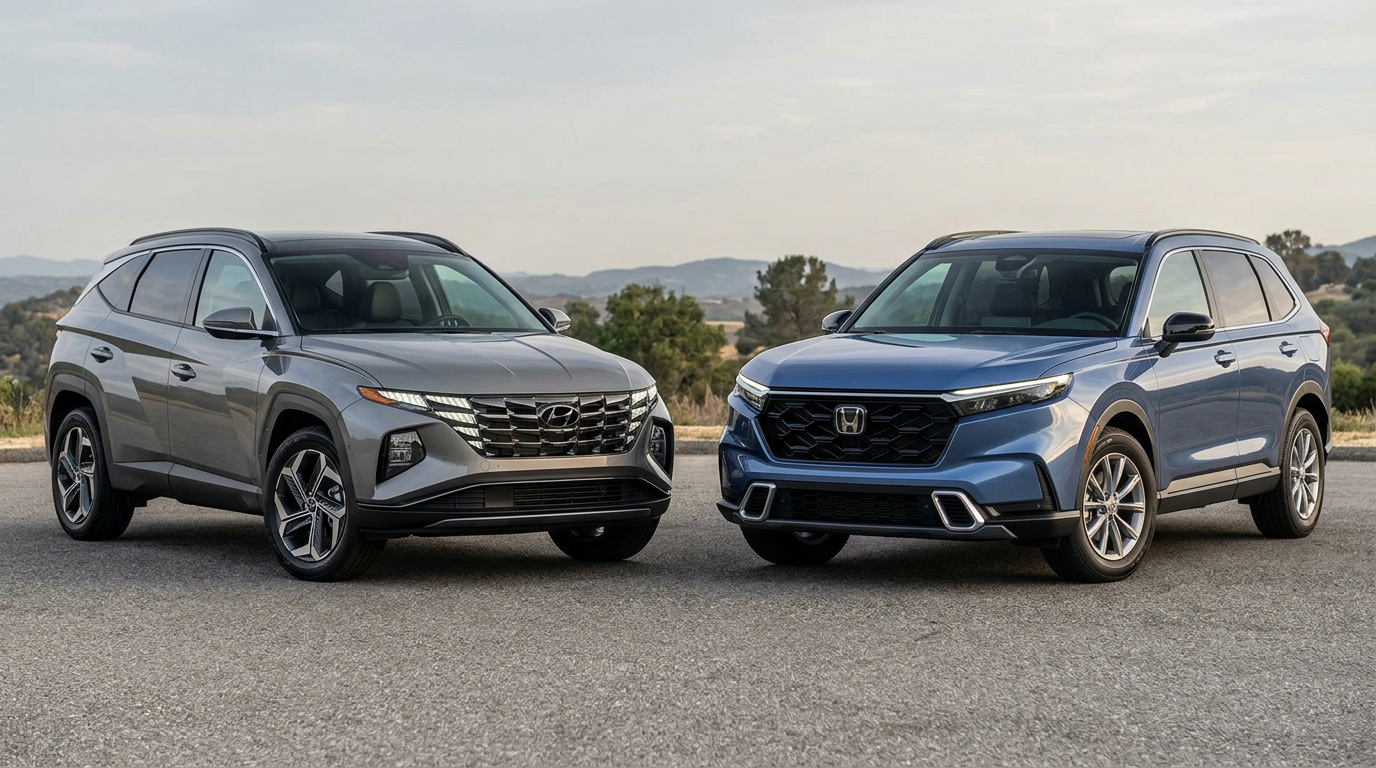
The 2026 Hyundai Tucson delivers strong overall performance flexibility and power compared to the 2026 Honda CR-V, offering up to 231 horsepower in its hybrid trim and 268 horsepower in its plug-in hybrid model, whereas the Honda CR-V maxes out at 204 horsepower in its hybrid trim. While the base CR-V gas model provides 190 horsepower from a turbocharged 1.5-liter engine, the Tucson gas model features a naturally aspirated 2.5L four-cylinder engine with 187 horsepower and 178 lb-ft of torque mated to an eight-speed automatic transmission, offering a different driving feel than Honda's continuously variable transmission. When comparing standard gas engines, the non-turbo 2.5L engine in the Tucson generates strong, linear power across the rev band. Power transfers directly through a conventional torque-converter eight-speed automatic transmission, giving drivers sharp gear shifts and predictable pedal response. The standard Honda CR-V uses a smaller 1.5-liter turbocharged engine generating 190 horsepower and 179 lb-ft of torque, but pairs it exclusively with a continuously variable transmission (CVT). Drivers who prefer distinct step-gear shifting may appreciate the Tucson during highway merging and passing maneuvers. For buyers seeking upgraded efficiency and muscle, the powertrain gap widens further in favor of Hyundai. The 2026 Hyundai Tucson Hybrid pairs a 1.6L turbocharged engine with an electric motor to generate a combined 231 horsepower and 271 lb-ft of torque, shifting through a proven six-speed automatic transmission. By contrast, the Honda CR-V Hybrid uses a 2.0-liter naturally aspirated engine with dual electric motors for 204 horsepower and 247 lb-ft of torque. Furthermore, Hyundai offers the Tucson Plug-in Hybrid with 268 horsepower and standard all-wheel drive, a high-output PHEV configuration not offered in the CR-V lineup. For drivers taking on daily commutes through Dover, the Tucson provides balanced power delivery that handles flat coastal plain routes and merging highway traffic with equal ease. To inspect the full lineup or arrange a test drive, feel free to give our team a call at (302) 877-2489 or stop by our Dover showroom location. Table of Contents How Do the Hybrid Powertrains and EPA Fuel Economy Ratings Compare? Transmission Response and Towing Capacity: 8-Speed Automatic vs. CVT How Does Tucson and CR-V Performance Compare to the Toyota RAV4? What Reliability Ratings, Maintenance Costs, and Warranties Support Long-Term Value? Frequently Asked Performance Questions About the 2026 Tucson and CR-V Experience 2026 Hyundai Tucson Performance How Do the Hybrid Powertrains and EPA Fuel Economy Ratings Compare? The 2026 Hyundai Tucson Hybrid delivers an EPA-estimated 38 mpg combined in its Blue SE HEV AWD trim while providing significantly more horsepower and torque than the Honda CR-V Hybrid. While front-wheel drive CR-V Hybrid trims achieve up to 43 mpg combined and all-wheel drive CR-V Hybrids reach up to 40 mpg combined, the Tucson Hybrid trades a minor mileage delta for a substantial performance advantage of 231 horsepower and 271 lb-ft of torque, compared to Honda's 204 horsepower and 247 lb-ft of torque. Hyundai achieves this higher torque output by utilizing a 1.6L turbocharged engine paired with a parallel electric motor and a geared six-speed automatic transmission. Most hybrid crossovers in this segment employ naturally aspirated engines connected to electronic continuously variable transmissions (e-CVTs), which can cause high engine RPM droning during sustained uphill climbs or rapid acceleration. The Tucson Hybrid’s geared setup preserves traditional shift feel while delivering immediate low-end electric torque. For commuters comparing standard gas efficiency, the non-hybrid Tucson gas model delivers an EPA-rated 25 mpg city / 33 mpg highway / 28 mpg combined with front-wheel drive, and 24 mpg city / 30 mpg highway / 26 mpg combined when equipped with all-wheel drive. Standard gas CR-V models achieve 28 mpg city / 34 mpg highway in front-wheel drive and 27 mpg city / 32 mpg highway in all-wheel drive. Drivers interested in zero-emission daily commuting can opt for the Tucson Plug-in Hybrid ( 268 horsepower), which delivers an EPA-rated 77 MPGe combined in electric operation, 35 mpg combined in hybrid operation, and 32 miles of all-electric driving range. Honda currently offers no plug-in hybrid variant for the CR-V. 2026 Hyundai Tucson Blue SE HEV AWD: 38 mpg combined ( 38 city / 38 hwy), 231 horsepower, 271 lb-ft of torque. 2026 Hyundai Tucson Hybrid (SEL / Limited AWD): 36 mpg combined, 231 horsepower, 271 lb-ft of torque. 2026 Hyundai Tucson PHEV AWD: 77 MPGe combined, 35 mpg combined gas-hybrid, 32 miles EV range, 268 horsepower. 2026 Honda CR-V Hybrid AWD: 40 mpg combined, 204 horsepower, 247 lb-ft of torque. 2026 Honda CR-V Hybrid FWD: 43 mpg combined, 204 horsepower, 247 lb-ft of torque. If you are open to pre-owned options, you can also browse our pre-owned vehicle selection. Transmission Response and Towing Capacity: 8-Speed Automatic vs. CVT The standard gas 2026 Hyundai Tucson out-tows the standard gas Honda CR-V with a maximum towing capacity of 2,000 lbs (and up to 2,750 lbs when maximum equipped) compared to the CR-V gas model's 1,500-pound limit. In addition to towing more weight, the Tucson uses a standard eight-speed automatic transmission ( SHIFTRONIC®) that provides crisp gear engagement, contrasting with the continuous gear-ratio adjustments of the CR-V's continuously variable transmission. Buyers comparing these crossovers on a test drive often notice how the Tucson's traditional eight-speed automatic transmission provides distinct, predictable shift points when accelerating onto highway merging ramps compared to the continuous engine speed of a CVT. Under hard throttle application, CVTs often force the engine to hold high revolutions, creating a noticeable cabin hum. The SHIFTRONIC® transmission in the Tucson lets drivers manually select gears when descending grades or pulling a light trailer, maintaining direct mechanical connection and engine braking control. Towing capabilities further separate these two compact SUVs: Hyundai Tucson Gas (2.5L): Standard tow rating of 2,000 lbs, with maximum capability reaching 2,750 lbs when properly equipped with trailer brakes. Honda CR-V Gas (1.5L Turbo): Rated for up to 1,500 lbs towing capacity. Honda CR-V Hybrid (2.0L): Rated for up to 1,000 lbs towing capacity. Whether hauling small utility trailers, personal watercraft, or weekend camping gear, the Tucson provides a higher margin of towing confidence. Buyers exploring value-minded choices with strong capability can check certified pre-owned Hyundai pricing to compare late-model availability. How Does Tucson and CR-V Performance Compare to the Toyota RAV4? The standard Toyota RAV4 gas model delivers 203 horsepower from its 2.5-liter engine, outpowering the base 187-horsepower Tucson gas engine and the 190-horsepower CR-V gas engine, but the 2026 Hyundai Tucson Hybrid ( 231 horsepower) and Tucson Plug-in Hybrid ( 268 horsepower) comfortably exceed the peak output of both the RAV4 gas (203 hp) and RAV4 Hybrid (219 hp). In terms of torque, the Hyundai Tucson Hybrid family generates 271 lb-ft of torque, outclassing the RAV4 Hybrid's 163 lb-ft of gas engine torque and the CR-V Hybrid's 247 lb-ft of system torque. This extra low-end power gives the Tucson Hybrid an advantage when pulling away from stops or passing slower traffic on two-lane roads. Base Gas Engine Horsepower: Toyota RAV4 (203 hp) > Honda CR-V (190 hp) > Hyundai Tucson 2.5L ( 187 hp). Hybrid System Horsepower: Hyundai Tucson Hybrid ( 231 hp) > Toyota RAV4 Hybrid (219 hp) > Honda CR-V Hybrid (204 hp). Plug-In Hybrid Horsepower: Toyota RAV4 Prime (302 hp) > Hyundai Tucson PHEV ( 268 hp) > Honda CR-V (No PHEV offered). Standard Towing Capacity: Hyundai Tucson ( 2,000 lbs standard / 2,750 lbs max) > Toyota RAV4 (1,500 lbs standard) = Honda CR-V (1,500 lbs). For suburban commuters navigating the farmland connectors around Middletown, the Tucson Hybrid's combined torque and geared automatic transmission offer responsive acceleration through variable road conditions. When you are ready to explore purchase options, you can get started by prequalifying for credit online. What Reliability Ratings, Maintenance Costs, and Warranties Support Long-Term Value? The 2026 Hyundai Tucson offers long-term protection with America's Best Warranty, featuring a 10-year/100,000-mile powertrain warranty and a 5-year/60,000-mile limited warranty, whereas Honda covers the CR-V with a 3-year/36,000-mile basic warranty and a 5-year/60,000-mile powertrain warranty. In addition, Hyundai includes complimentary factory maintenance for the first 3 years or 36,000 miles, helping lower initial 5-year out-of-pocket ownership costs relative to rivals. While the Honda CR-V maintains a strong historical reputation for low unscheduled repair frequency, Hyundai narrows the ownership cost gap through comprehensive warranty backing and bundled factory service. By eliminating routine oil change and tire rotation costs during early ownership, Tucson owners retain lower predictable routine maintenance expenses. Entry pricing across the 2026 Tucson lineup provides options across a range of price points, starting with the SE FWD at a base MSRP of $29,700 (plus a $1,650 destination charge). Moving to the standard all-wheel drive Blue SE HEV AWD hybrid brings an entry base MSRP of $32,800. Higher trim levels like the SEL Convenience HEV AWD start at $35,250 base MSRP, while the fully equipped Limited PHEV AWD reaches $48,900 base MSRP. To keep your crossover running at peak efficiency throughout its lifecycle, our factory-trained service technicians are ready to assist with routine care when you are scheduling a maintenance appointment online. Frequently Asked Performance Questions About the 2026 Tucson and CR-V Q: Does the 2026 Hyundai Tucson Hybrid require a plug or external charger? No, the standard 2026 Hyundai Tucson Hybrid uses regenerative braking and engine power to self-charge its onboard battery automatically during driving. Only the Tucson Plug-in Hybrid (PHEV) features an external charge port, which allows drivers to plug in and receive up to 32 miles of all-electric driving before switching over to standard hybrid operation. Q: Which SUV offers higher overall horsepower in its hybrid configuration? The 2026 Hyundai Tucson Hybrid provides 231 horsepower and 271 lb-ft of torque, outperforming the Honda CR-V Hybrid's total system output of 204 horsepower and 247 lb-ft of torque. The Tucson achieves this higher rating by combining a 1.6L turbocharged engine with an electric motor and a geared six-speed automatic transmission. Q: Can the 2026 Hyundai Tucson handle light trail driving or inclement weather? Yes, Tucson models equipped with Hyundai's active all-wheel drive system continuously monitor road traction to distribute engine torque between the front and rear axles. With ample ground clearance and selectable drive modes, the Tucson manages wet pavement, light mud, unpaved gravel, and slippery winter conditions with confidence. Q: How does standard gas engine acceleration compare between the Tucson and CR-V? The Honda CR-V's 1.5-liter turbocharged engine delivers slightly faster 0-60 mph launch times, but the Tucson's naturally aspirated 2.5L engine paired with an eight-speed automatic transmission provides linear acceleration without reliance on turbo spooling or the engine droning associated with continuous variable transmissions. Q: What routine document preparation helps speed up a vehicle test drive or purchase visit? Arriving with a valid driver's license, a current auto insurance card, and recent proof of income or trade-in documentation allows our dealership staff to quickly organize test drives and complete financing steps without delays. Experience 2026 Hyundai Tucson Performance With its advanced hybrid system delivering up to 268 horsepower and an eight-speed automatic transmission, the 2026 Hyundai Tucson offers a compelling performance package that surpasses many competitors. Combined with America's Best Warranty—including a 10-year/100,000-mile powertrain warranty —the Tucson delivers driving confidence, competitive fuel efficiency, and overall value. Our team at Winner Hyundai is dedicated to helping you explore the Tucson lineup firsthand. Whether you want to test drive the standard gas 2.5L engine or experience the torque of the 1.6L turbocharged engine hybrid, we are here to assist you. Contact our sales team directly at (302) 877-2489 to ask questions or set up your appointment. when you are ready to visit us, visit our Dover showroom at 591 S Dupont Hwy, Dover, DE 19901 to compare trims and get behind the wheel today. © 2026 Winner Hyundai. All rights reserved. Vehicle specification data © JATO Dynamics Limited.
Winner Hyundai Multi Point Inspection

What Happens During a Hyundai Multi-Point Inspection?

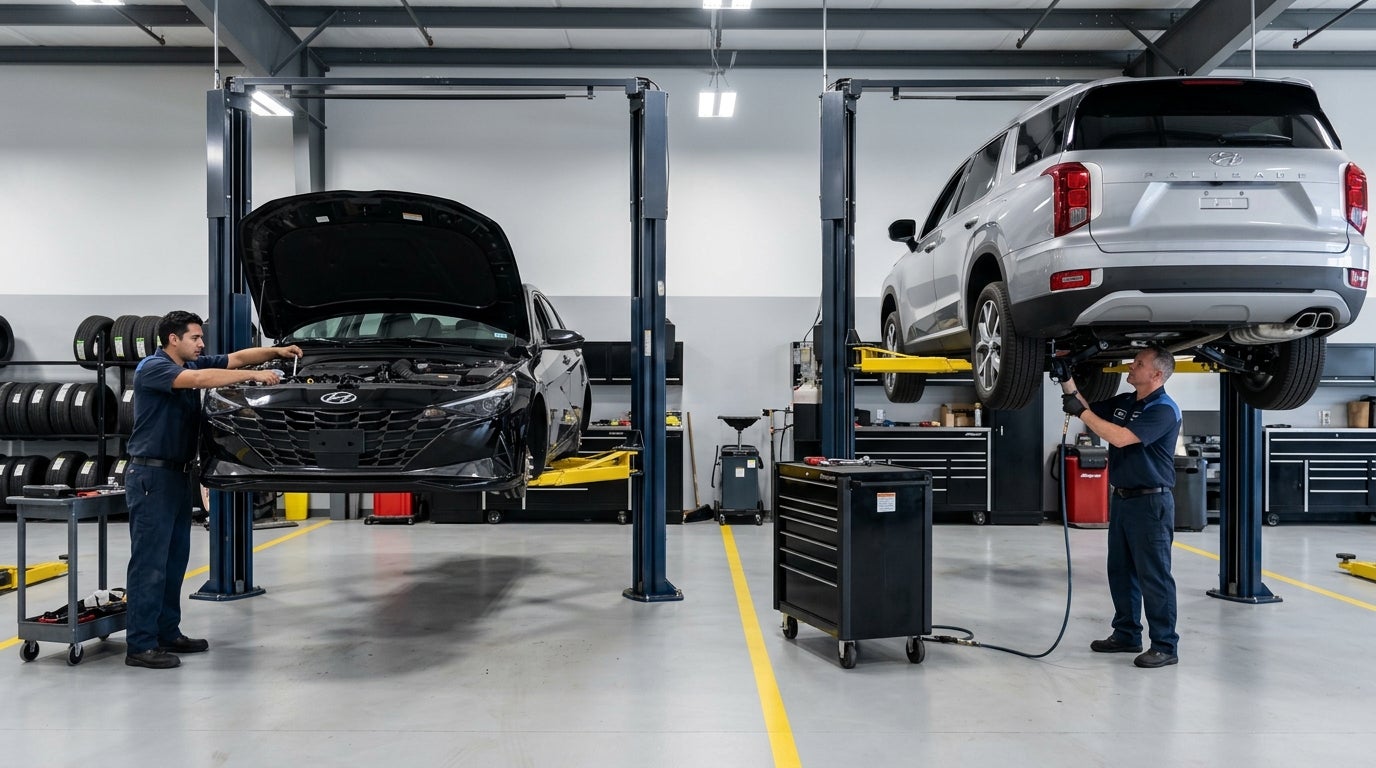
A Hyundai multi-point inspection is a visual and mechanical diagnostic evaluation where certified technicians examine vital vehicle systems, including brake pad thickness, tire tread depth and inflation pressure, battery health, fluid condition, drive belts, and suspension components. Technicians document findings using a standardized color-coded reporting system—green for optimal condition, yellow for upcoming maintenance needs, and red for urgent safety repairs—allowing vehicle owners to address minor wear before severe mechanical damage occurs. During every routine service visit, factory-trained technicians systematically evaluate critical components across the entire chassis and engine bay: Braking Systems: Measuring front and rear brake pad lining thickness in millimeters, inspecting rotor surface integrity for scoring or heat cracks, and testing hydraulic brake fluid moisture content. Tires and Wheels: Checking tread depth across inner, center, and outer tread blocks, identifying irregular alignment wear, inspecting sidewalls for impacts, and adjusting cold inflation pressure. Under-hood Fluids: Verifying level and clarity for engine oil, engine coolant, transmission fluid, power steering fluid, and windshield washer fluid. Electrical and Battery Systems: Conducting a conductance test on the 12-volt battery to measure cold-cranking capacity, inspecting terminal posts for corrosion, and checking exterior lighting. Underbody and Drivetrain: Inspecting steering gearboxes, CV axle boots, shock absorbers, struts, exhaust systems, and fuel lines for leaks or structural damage. Commuters traveling agricultural back roads around Camden frequently encounter airborne dust and loose gravel that can saturate filters earlier than standard intervals. Measuring air filter restriction during routine checks ensures engine efficiency remains uncompromised. Performing these structured checks during routine oil service allows drivers to plan future maintenance proactively. To have factory-certified specialists evaluate your vehicle, visit our Dover service center location or give our service desk a call at (302) 877-2489. Table of Contents How Does Hyundai Bluelink Connected Services Work? Which Dashboard Warning Lights Require Immediate Hyundai Service? What Factory Coverage Is Included in Hyundai Complimentary Maintenance? Where Can You Find Authorized Hyundai Care, Direct Contact Numbers, and service specials in Dover? Frequently Asked Questions About Hyundai Maintenance How to Schedule Certified Hyundai Service at Winner Hyundai How Does Hyundai Bluelink Connected Services Work? Hyundai Bluelink remote diagnostic reporting provides connected vehicle alerts and diagnostic information for certain vehicle systems. When an anomaly occurs, Bluelink transmits system health alerts directly to the driver's MyHyundai mobile application, sends email notifications, and displays detailed alert messages on the central touchscreen display. The system integrates remote vehicle telemetry into everyday ownership care through three core functions: Automated Diagnostic Scans: The vehicle runs self-diagnostic health checks across major powertrain, braking, electrical, and safety systems. If an active fault code triggers a dashboard warning symbol, Bluelink decodes the error and delivers a plain-language summary to your smartphone. In-Vehicle Service Link: Drivers can initiate on-demand diagnostic checks directly from the vehicle touchscreen. Pressing the Service Link button on the rearview mirror or center display automatically transmits diagnostic fault codes directly to our service department, simplifying appointment booking. Monthly Vehicle Health Reports: Subscribers receive comprehensive monthly health summaries detailing engine performance, tire pressure status, transmission condition, and upcoming maintenance milestones. Bluelink+ is included at no extra cost for original owners of 2023 IONIQ 6 models and 2024 or newer Bluelink -equipped Hyundai vehicles. Pre-owned buyers receive a complimentary three-month trial of the Advanced package, while basic diagnostic features remain included for life. To learn more about setting up connected care features on your vehicle, explore our detailed Hyundai Bluelink tech overview. Which Dashboard Warning Lights Require Immediate Hyundai Service? A flashing check engine light, red battery charge symbol, red engine oil pressure light, or solid red brake warning light require immediate vehicle shutdown and professional diagnostic attention. Continuing to operate a vehicle with active red critical warning indicators or a flashing engine light can lead to catastrophic engine failure, sudden power loss, or severe catalytic converter destruction. Understanding the difference between yellow advisory symbols and red emergency indicators helps protect your powertrain from expensive damage: Flashing Check Engine Light: Signals an active, severe engine misfire. Unburned fuel entering the exhaust stream can overheat and destroy the catalytic converter within miles. Red Oil Pressure Indicator: Indicates a critical drop in engine oil pressure. Operating an engine without proper hydraulic pressure causes metal-on-metal friction and immediate internal engine seizure. Red Battery / Charging Light: Indicates that the alternator is no longer supplying electrical power to charge the 12-volt battery, which will soon result in complete electrical shutdown. Solid Red Brake System Light: Points to a loss of hydraulic brake fluid pressure or an engaged parking brake, compromising stopping power. Yellow / Amber Warning Indicators: Symbols such as a solid check engine light, TPMS tire pressure light, or ABS indicator signal non-emergency faults that still require prompt inspection. Seasonal temperature swings during Mid-Atlantic winters frequently trigger tire pressure warnings as cold air condenses inside tire cavities. To ensure your tires remain properly inflated and balanced, browse our current tire service coupons and offers before your visit. What Factory Coverage Is Included in Hyundai Complimentary Maintenance? Hyundai Complimentary Maintenance covers factory-scheduled synthetic engine oil changes, oil filter replacements, tire rotations, and multi-point vehicle inspections for 3 years or 36,000 miles, whichever comes first. For 2025 model year retail vehicles, the program covers up to four basic maintenance visits performed at authorized service centers within recommended factory intervals. Factory maintenance guidelines require precise fluid and filter specifications to maintain high thermal stability and internal engine cleanliness: Factory Engine Oil: Services utilize full-synthetic SAE 0W-20 engine oil meeting API SP or GF-6 standards, designed to protect internal engine components during cold morning starts and high-temperature highway driving. Genuine OEM Filters: Engine oil changes include Genuine Hyundai oil filters built with anti-drainback valves that prevent dry engine starts. Tire Rotations: Rotating tires every 7,500 miles ensures even tread wear across front and rear axles, supporting optimal traction and wet-weather stability. Complimentary coverage applies strictly to basic scheduled maintenance outlined in the owner's manual. Wear-and-tear items such as brake pads, rotor resurfacing, wiper blades, cabin micro-filters, engine air filters, and wheel alignments remain the owner's responsibility. Adhering to factory service intervals also preserves overall coverage under Hyundai's 10-year / 100,000-mile powertrain limited warranty and 5-year / 60,000-mile new vehicle limited warranty. Where Can You Find Authorized Hyundai Care, Direct Contact Numbers, and service specials in Dover? Authorized Hyundai service, genuine OEM replacement parts, and factory-certified repair technicians in central Delaware are located at Winner Hyundai, situated at 591 S Dupont Hwy, Dover, DE 19901. Vehicle owners can reach our service department directly by calling ( 302) 497-3620 or contact the parts counter directly at ( 302) 497-3621. Our facility operates during convenient weekly and weekend hours to accommodate busy work schedules: Service Department Hours: Monday through Friday from 7:30 AM to 6:00 PM; Saturday from 8:00 AM to 5:00 PM; Closed Sunday. Parts Department Hours: Monday through Friday from 7:30 AM to 5:00 PM; Saturday from 8:00 AM to 5:00 PM; Closed Sunday. Main Dealership Line: Reach our customer support team at (302) 877-2489 for general inquiries. Drivers commuting past the low-lying wetland corridors near Milford often experience moisture accumulation that accelerates brake pin oxidation and rotor corrosion, making regular factory inspections essential. To keep vehicle maintenance affordable, our dealership publishes monthly current offers online for oil changes, brake rotor resurfacing, battery replacements, and cabin filter services. You can easily schedule certified Hyundai service online to reserve a dedicated service bay with our factory-trained team. Frequently Asked Questions About Hyundai Maintenance Q: How often should synthetic engine oil be changed in a Hyundai? Under normal driving conditions, Hyundai recommends full-synthetic engine oil changes every 7,500 miles or 12 months. Vehicles operated under severe conditions—such as frequent short trips under 10 miles, extended idling, driving in dusty environments, or towing—require shorter intervals of 3,750 to 5,000 miles or 6 months to prevent internal oil sludge buildup. Q: Does Hyundai Complimentary Maintenance transfer to a second owner? Hyundai Complimentary Maintenance applies strictly to the original retail purchaser or lessee and is non-transferable, with an exception allowed for transfers between spouses. Pre-owned buyers do, however, retain any remaining balance of the 5-year / 60,000-mile new vehicle limited warranty when purchasing a eligible vehicle. Q: What engine oil viscosity and specification does Hyundai recommend? Most recent Hyundai gasoline engines specify full-synthetic SAE 0W-20 engine oil meeting API SP or GF-6 industry standards. Using correct factory-spec oil maintains internal engine tolerances, optimizes cold-weather startup lubrication, and preserves fuel efficiency. Q: How often should Hyundai brake fluid and filters be replaced? Factory maintenance guidelines recommend replacing brake fluid every 2 to 3 years regardless of mileage because brake fluid absorbs atmospheric moisture over time. Cabin air micro-filters require replacement every 15,000 miles, while engine air filters should be replaced every 30,000 miles under normal driving. Q: How does Hyundai 24/7 Roadside Assistance work during a breakdown? Included with new Hyundai vehicles for 5 years / unlimited miles, Hyundai Roadside Assistance provides emergency towing to the nearest authorized dealer, battery jump-starts, flat tire changes, lockout assistance, and emergency fuel delivery. How to Schedule Certified Hyundai Service at Winner Hyundai Keeping your Hyundai operating safely requires specialized diagnostic tools, Genuine OEM parts, and factory-trained technicians who understand your exact powertrain configuration. Whether your vehicle requires a routine synthetic oil change, a comprehensive multi-point vehicle inspection, or warranty service, scheduling an appointment at Winner Hyundai takes only a few moments online or by phone. Our modern service center at 591 S Dupont Hwy, Dover, DE 19901 features comfortable customer amenities, complimentary Wi-Fi, and private work stations while certified technicians service your vehicle. To reserve your next service date, get step-by-step directions to Winner Hyundai or give our service desk a quick call at (302) 877-2489 to confirm availability today. © 2026 Winner Hyundai. All rights reserved.