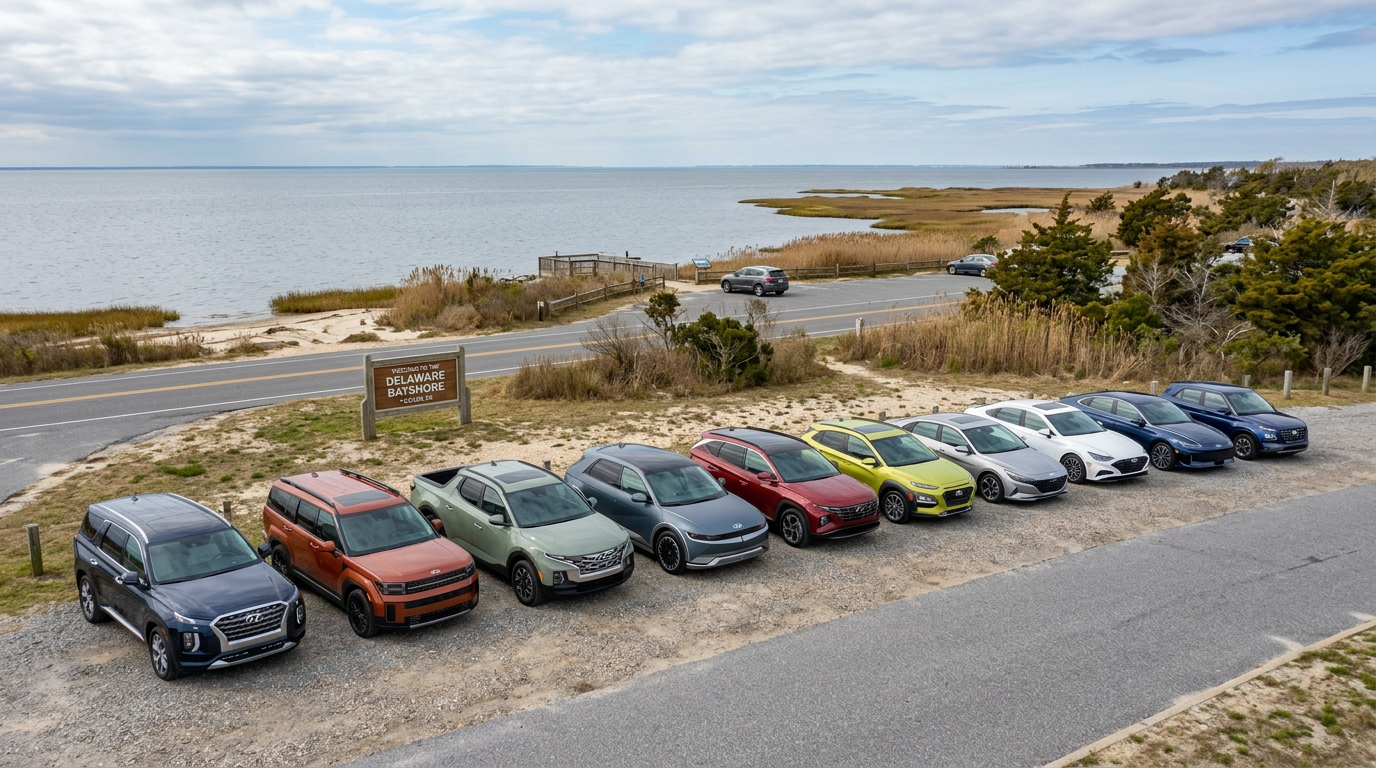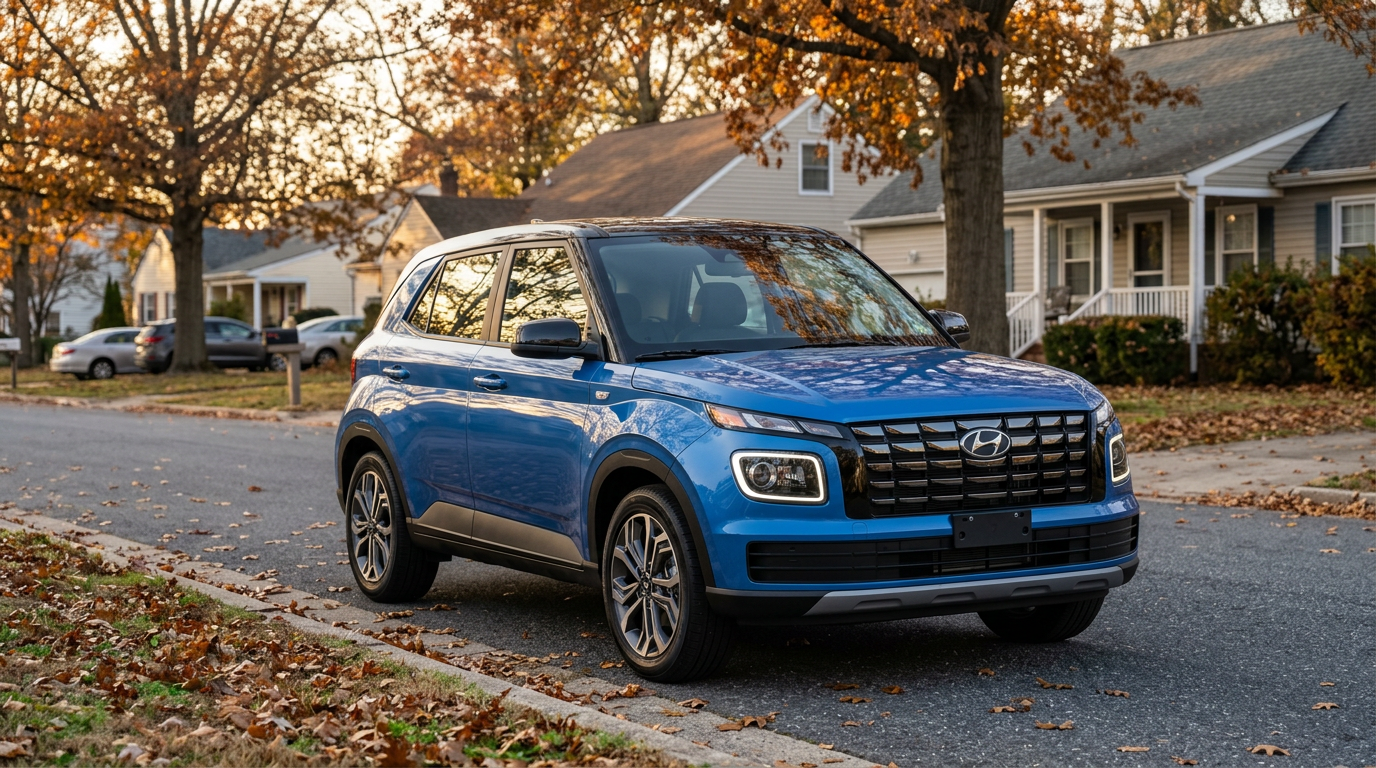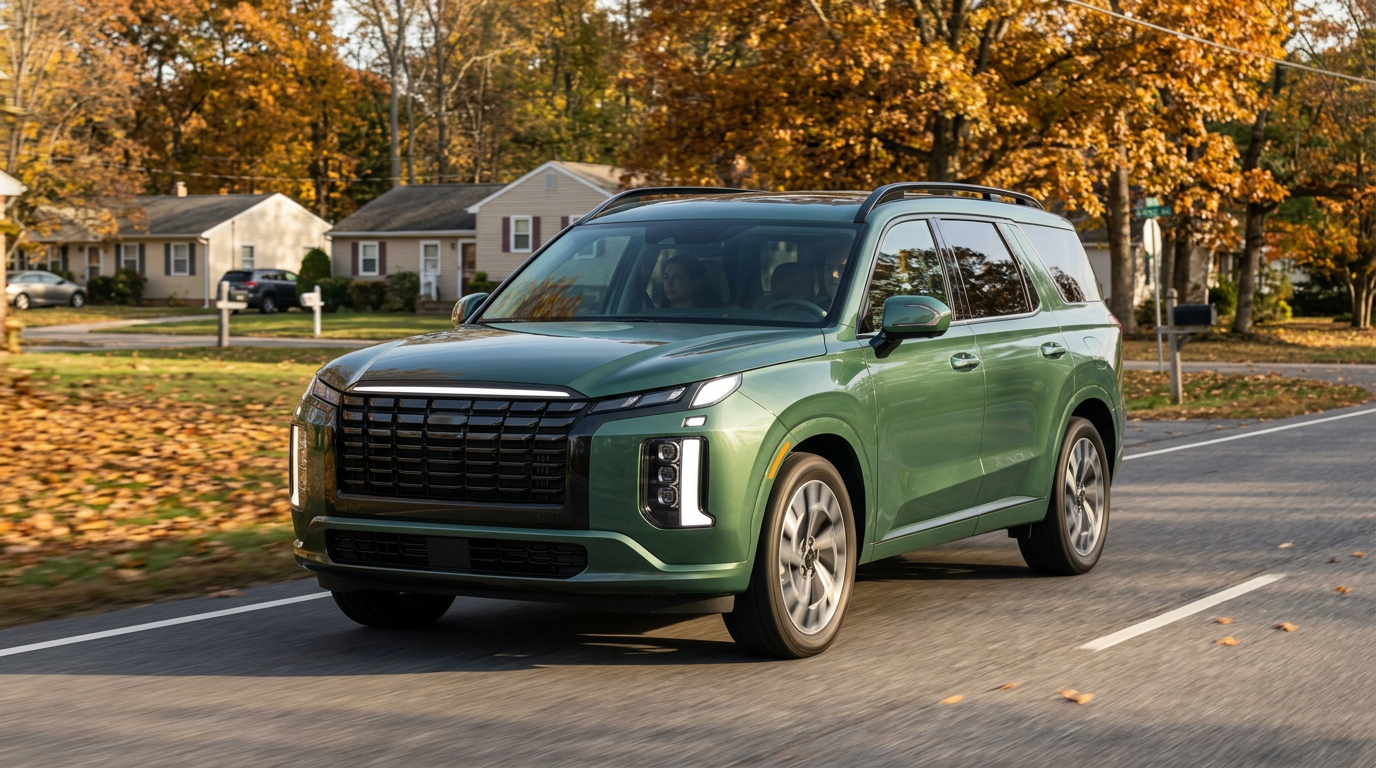



The right Hyundai model for your lifestyle depends on whether you prioritize fuel economy, interior cargo capacity, passenger seating, or advanced electric performance. Drivers looking for maximum daily commuting efficiency should consider compact options like the Elantra sedan or Tucson crossover, while growing families needing three rows of seating will find the Santa Fe or flagship Palisade best suited to their routine. Drivers wanting standard dynamic safety features across every price point will appreciate that all core models feature Hyundai SmartSense technology backed by a 10-Year/100,000-Mile Powertrain Limited Warranty. Choosing among sedan, crossover, SUV, and electric vehicle configurations comes down to evaluating how you use your vehicle every single day. Sedan drivers gain exceptional highway mileage and nimble maneuverability, making commuting effortless. Crossovers like the Tucson deliver elevated seating positions, standard or available HTRAC All-Wheel Drive, and flexible rear cargo room without the larger footprint of a traditional midsize SUV. For larger households requiring flexible seating and towing capability, three-row crossovers provide dedicated passenger space and adaptable fold-flat seating layouts. Electric vehicles offer immediate electric torque, low routine operating costs, and rapid public charging capabilities. At Winner Hyundai, our team walks you through every vehicle class to help you balance cabin space, technology, and performance. You can reach out to our team at (302) 877-2489 or stop by our Dover showroom location to compare models side by side. Table of Contents What Is the Difference Between Hyundai SUV Sizes Across the Lineup? How Do the Hyundai Tucson and Hyundai Santa Fe Compare in Cargo and Space? What Is the Estimated Electric Driving Range of the Hyundai IONIQ 5? What Is the Starting Price and Value of the Hyundai Elantra Sedan? What Features and Protection Come Standard with Hyundai SmartSense and America's Best Warranty? Common Questions About the Hyundai Model Lineup What Is the Difference Between Hyundai SUV Sizes Across the Lineup? Hyundai structures its SUV lineup across four primary size categories ranging from urban subcompact crossovers to spacious flagship three-row family haulers. The subcompact Venue and Kona anchor the entry level with high maneuverability and efficient engine choices, followed by the compact Tucson, the midsize three-row Santa Fe, and the full-size three-row Palisade. Understanding how dimensions translate to real-world capability helps clarify which size class meets your space requirements: Subcompact crossovers offer exceptional urban parking ease, efficient 2.0L 4-cylinder engines, and elevated sightlines for individual drivers or small households. Compact crossovers step up to expanded rear legroom, versatile rear hatch utility, and available hybrid or plug-in hybrid powertrains. Midsize crossovers introduce available three-row passenger configurations, square rear cargo openings, and enhanced towing capabilities up to 3,500 lbs. Full-size SUVs deliver standard three-row seating for up to eight passengers, an expansive 114-inch wheelbase, and maximum towing ratings reaching 4,000 lbs to 5,000 lbs. In suburban areas like Middletown, where residential developments connect directly to agricultural corridors and highway routes, buyers frequently ask how crossover ground clearance and cargo accessibility handle changing seasonal needs. Compact options handle tight garage parking effortlessly while offering plenty of hatch room for athletic gear or weekend supplies. Moving up to midsize and full-size models provides wide-opening rear doors and power-folding seating buttons that make loading large cargo items or car seats straightforward. You can explore our complete pre-owned inventory selection to compare sizing, seating variations, and cargo layouts across multiple model years. How Do the Hyundai Tucson and Hyundai Santa Fe Compare in Cargo and Space? The fundamental space difference between the Tucson and Santa Fe centers on row capacity and total cargo volume, with the compact Tucson featuring two rows for five passengers and the midsize Santa Fe offering three rows for up to seven passengers. The Tucson provides 39 cubic feet of cargo room behind its second row and expands to 75 cubic feet with the rear seats folded flat. By contrast, the larger Santa Fe provides 15 cubic feet behind its third row, 41 cubic feet behind its second row, and a maximum total capacity of 80 cubic feet. Choosing between these two popular crossovers depends on how often you haul passengers versus gear. The Tucson utilizes its compact footprint to deliver crisp handling and an EPA-estimated 38 mpg city / 38 mpg highway on hybrid variants, making it a favorite for commuters who want hatchback versatility without extra exterior bulk. Its lower lift-over height makes sliding heavy luggage or groceries into the rear cargo hold simple and strain-free. The Santa Fe caters to expanding family schedules with a boxier, exterior profile designed to optimize interior headroom and rear cargo width. Its standard or available third row folds flat into the load floor when not in use, creating an expansive utility space ideal for family road trips or bulky cargo. What Is the Estimated Electric Driving Range of the Hyundai IONIQ 5? The Hyundai IONIQ 5 delivers an EPA-estimated electric driving range between 220 miles and 303 miles on a single charge, depending on the selected battery capacity and drivetrain configuration. Standard range models equipped with a 58-kWh battery and rear-wheel drive offer up to 220 miles, while long-range variants featuring a 77.4-kWh battery achieve up to 303 miles in single-motor rear-wheel drive or 260 miles in dual-motor HTRAC All-Wheel Drive trim. Real-world driving distance varies based on driving speed, ambient outdoor temperatures, terrain, and climate control usage. The IONIQ 5 utilizes an advanced 800V ultra-fast charging architecture that minimizes downtime during longer trips. When connected to a 350-kW DC fast charger, the battery can charge from 10% to 80% in approximately 18 minutes. For home charging, an installed Level 2 240-volt charger fully replenishes the battery overnight in roughly 7 hours. In government and professional commuting centers like Dover, EV drivers routinely cover predictable daily highway routes where regenerative braking systems recover energy during stop-and-go driving. Our team regularly sees shoppers take test drives to try the steering-wheel paddle shifters, which adjust regenerative braking resistance on the fly. Drivers can easily transition from coasting on open highways to single-pedal urban driving. If you are considering upgrading to electric driving, you can complete our secure online credit application to contact the dealership about current financing options before visiting our dealership. What Is the Starting Price and Value of the Hyundai Elantra Sedan? The 2026 Hyundai Elantra starts at a base MSRP of $22,825 for the SE trim, making it one of the most accessible tech-focused compact sedans available today. Power comes from a efficient 147-hp 2.0L 4-cylinder engine paired with a Smartstream Intelligent Variable Transmission, achieving an EPA-estimated 31 mpg city / 40 mpg highway / 35 mpg combined. Buyers seeking maximum efficiency can choose the Elantra Hybrid, starting at $25,650 for the Blue trim, which delivers an impressive 51 mpg city / 58 mpg highway / 54 mpg combined. Across its lineup—including the balanced SEL Sport, luxurious Limited, and turbocharged 201-hp N Line —the Elantra equips essential interior technology as standard equipment: Standard 8-inch color touchscreen or available dual 10.25-inch digital displays with built-in navigation Standard wireless Apple CarPlay and Android Auto integration on entry trims Standard safety tech including Forward Collision-Avoidance Assist with Pedestrian Detection and Lane Keeping Assist Available premium interior upgrades such as Bose Premium Audio, H-Tex leatherette seating, and heated front seats The Elantra maximizes long-term ownership value by delivering low fuel consumption alongside high standard equipment levels that often cost extra on other compact cars. What Features and Protection Come Standard with Hyundai SmartSense and America's Best Warranty? Every new Hyundai comes standard with Hyundai SmartSense, an integrated suite of advanced driver-assistance safety technologies, alongside America's Best Warranty. The SmartSense suite utilizes radar, camera, and ultrasonic sensor networks to monitor your surroundings, alert you to potential hazards, and intervene with automatic braking or steering assistance when necessary. Key safety and convenience features included across the lineup include: Forward Collision-Avoidance Assist with Pedestrian Detection (FCA-Ped): Scans the road ahead and applies automatic emergency braking if a collision risk is detected. Blind-Spot Collision-Avoidance Assist (BCA): Alerts you to vehicles in your side blind spots and can gently apply outer brakes to prevent unsafe lane changes. Lane Keeping Assist (LKA) and Lane Following Assist (LFA): Provide subtle steering inputs to keep your vehicle safely centered within marked lanes. Rear Cross-Traffic Collision-Avoidance Assist (RCCA): Detects vehicles approaching from either side while reversing out of parking spaces or driveways. Safe Exit Assist (SEA): Warns occupants exiting the vehicle if radar detects oncoming traffic approaching from behind. Ownership protection is anchored by America's Best Warranty, providing comprehensive coverage designed to lower long-term repair costs. The package includes a 10-Year/100,000-Mile Powertrain Limited Warranty for original owners, a 5-Year/60,000-Mile New Vehicle Limited Warranty, a 7-Year/Unlimited Miles Anti-Perforation Warranty, and a 10-Year/100,000-Mile Hybrid/EV Battery Warranty that guarantees battery capacity will not degrade below 70%. Additionally, every new model includes 5-Year/Unlimited Miles 24-Hour Roadside Assistance. If you ever require emergency assistance, flat tire changes, towing, or lockout help, you can call Hyundai Roadside Assistance: 1-800-243-7766 for prompt, manufacturer-backed coverage anywhere in the country. For buyers interested in pre-owned peace of mind, explore our certified pre-owned Hyundai inventory to find factory-inspected vehicles backed by extended powertrain protection. Common Questions About the Hyundai Model Lineup Q: What does the Hyundai 10-Year/100,000-Mile Powertrain Warranty cover? The 10-Year/100,000-Mile Powertrain Limited Warranty covers the repair or replacement of major engine, transmission, and transaxle components originally manufactured or installed by Hyundai that prove defective in factory workmanship or materials under normal maintenance. This coverage applies to original owners and covers critical internal engine parts, cylinder blocks, water pumps, fuel pumps, torque converters, and transmission control units. Subsequent owners receive powertrain protection under the remaining balance of the 5-Year/60,000-Mile New Vehicle Limited Warranty. Q: How fast can you charge the Hyundai IONIQ 5 on a public charger? When connected to a 350-kW DC fast charger, the Hyundai IONIQ 5 charges from 10% to 80% in approximately 18 minutes. On a standard 50-kW DC public fast charger, the same charging range takes roughly 43 minutes. For overnight charging at home using an installed Level 2 240-volt AC charger, a full charge takes approximately 7 hours for the 77.4-kWh battery pack. Q: Which Hyundai SUV models feature three rows of seating? The flagship Hyundai Palisade comes standard with three rows of seating for up to eight passengers, or seven passengers when equipped with second-row captain's chairs. The midsize Hyundai Santa Fe also features a standard three-row seating configuration for up to seven passengers. Both SUVs offer power-folding rear seats and dedicated third-row climate vents for passenger comfort. Q: What is the primary difference between standard hybrids and plug-in hybrids? Standard Hyundai hybrids use a gasoline engine alongside an electric motor and self-charging battery that recharges through regenerative braking, requiring no wall plug. Plug-in hybrid ( PHEV) models feature a larger battery pack that can be plugged into an external electrical outlet, enabling an all-electric driving range for short commutes before seamlessly switching over to gas-hybrid operation for longer travel. Q: What documents should buyers bring when applying for auto financing at the dealership? To streamline auto loan processing, buyers should bring a valid government-issued driver's license, current proof of vehicle insurance, your two most recent pay stubs or proof of income, and a recent utility bill to verify your physical address. If you plan to trade in a current vehicle, also bring its physical title or current payoff statement alongside all sets of keys. Gathering these documents beforehand allows our financial team to submit clean paperwork and secure approval decisions quickly. When you are ready to compare models, test-drive a crossover, or review trade-in values with our staff, visit Winner Hyundai at 591 S Dupont Hwy, Dover, DE 19901 or give our team a quick call at (302) 877-2489 to schedule your appointment. © 2026 Winner Hyundai. All rights reserved. Vehicle specification data © JATO Dynamics Limited.