



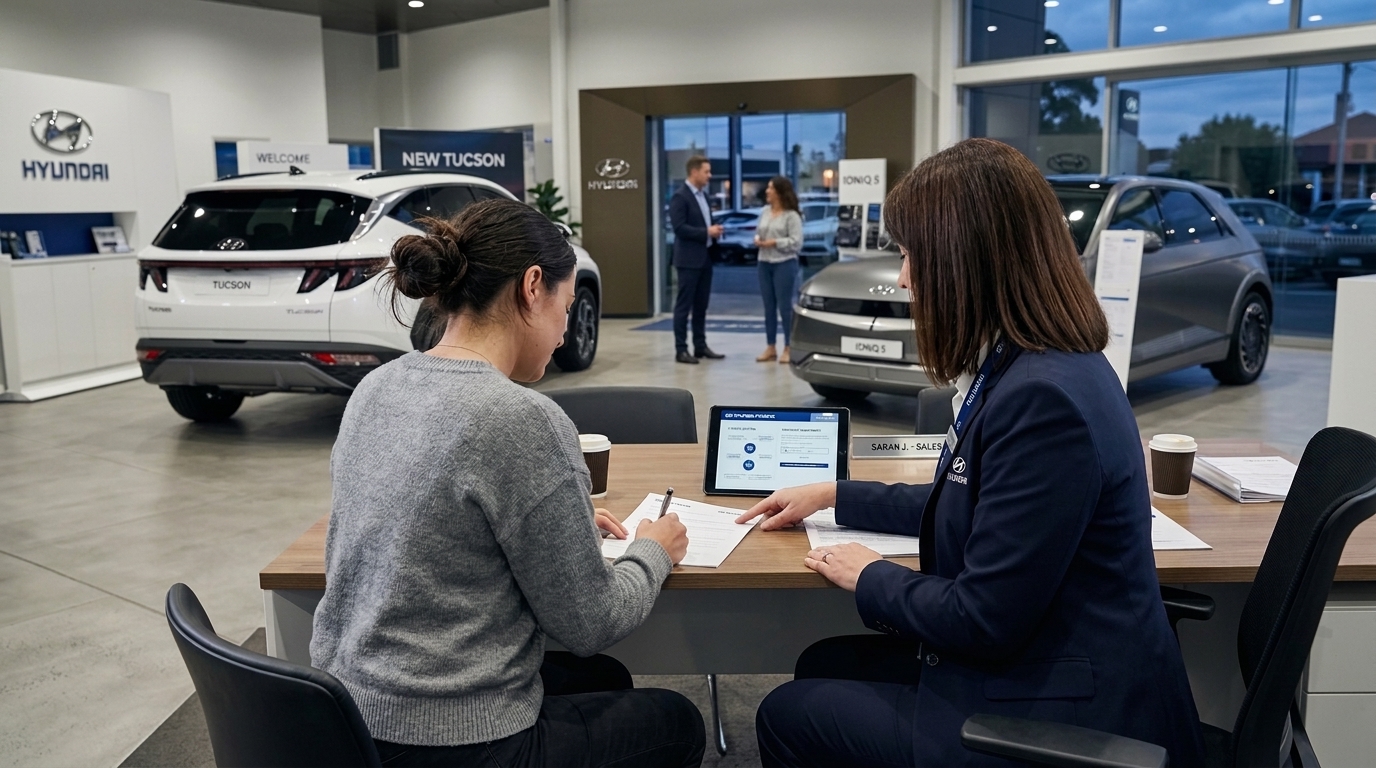
Leasing a car is worth it for drivers who prefer lower monthly payments, predictable driving habits within standard annual mileage allowances, and the flexibility to drive a new vehicle protected by factory warranties every two to three years. Instead of financing the full purchase price, lessees only pay for the projected depreciation over the lease term, making higher trim levels and advanced safety technologies significantly more accessible.
When you evaluate a vehicle lease, you are essentially paying for the portion of the vehicle’s life that you use. Traditional auto loans require paying down the entire balance of the vehicle, which results in higher monthly outlays. Leasing structures allow drivers to upgrade their technology, safety features, and comfort every few years without the long-term commitment or resale hassles of ownership.
Drivers interested in exploring current options can visit our showroom on Dupont Highway or give our team a quick call at (302) 877-2489 to review current inventory. If you are debating between pre-owned vehicles and leasing, you can search our pre-owned finder tool or use our custom vehicle finder service. For a complete breakdown of contract options, consult our buying versus leasing analysis alongside our pre-owned vehicle buying guide.
Table of Contents
- Is It Cheaper to Lease a Car Than Buy Outright, and What Upfront Costs Are Required?
- How Does Delaware Tax Treatment Favor Car Leasing Over Buying?
- What Are Standard Lease Mileage Limits, Excess Fees, and GAP Insurance Requirements?
- What Key Factors Should You Weigh When Choosing Between Leasing and Buying?
- What Are Your Options at the End of a Lease and How Can You Avoid Disposition Fees?
- Common Questions About Leasing a Vehicle in Delaware
Is It Cheaper to Lease a Car Than Buy Outright, and What Upfront Costs Are Required?
Leasing is often less expensive on a monthly cash-flow basis than buying a car outright or financing with a traditional auto loan because lease payments cover only depreciation and finance charges rather than the total principal balance. Upfront costs when starting a lease typically include the first monthly payment, state registration fees, an acquisition fee, and any agreed-upon down payment or capitalized cost reduction.
The financial mechanics of a lease center around three core numbers: the agreed purchase price (capitalized cost), the projected value at contract end (residual value), and the interest rate (money factor). Because the lessee only pays the difference between the capitalized cost and the residual value, monthly payments remain considerably lower than loan installments for the same model.
When establishing a lease contract, upfront drive-off fees generally include:
- First month’s payment
- Acquisition fee charged by the leasing institution
- State title, tag, and registration fees
- Optional down payment to reduce monthly payments
- Dealer documentation fees
Prospective lessees can manage initial expenses by exploring structured financing options. You can apply for flexible service financing for protection accessories, apply for financing online, or get pre-approved for auto financing before selecting a vehicle.
We offer available options across our lineup, including Tucson lease specials, Sonata leasing options, Santa Fe lease promotions, and versatile Santa Cruz payment plans. Families looking for maximum room can check Palisade lease figures, while compact shoppers can evaluate Kona lease packages and Elantra finance and lease specials.
Shoppers across the region can review current new vehicle lease offers, compare regional lease incentives, look through coastal region lease specials, check nearby lease promotions, view lease offers for Milford drivers, evaluate local lease deals, or inspect lease structures near Lewes.
How Does Delaware Tax Treatment Favor Car Leasing Over Buying?
Delaware provides a distinct tax advantage for vehicle leases by assessing its 4.25% document fee only on the total sum of monthly lease payments rather than the vehicle’s full purchase price. Because Delaware has no statewide sales tax or personal vehicle property tax, leasing significantly reduces upfront tax liability compared to outright vehicle purchases.
When purchasing a vehicle in Delaware, the 4.25% document fee applies to the entire negotiated sales price of the automobile. On a $35,000 purchase, that tax burden amounts to nearly $1,488 due at signing or rolled into the loan balance. Conversely, on a three-year lease where the total sum of monthly payments equals $12,000, the 4.25% fee is calculated strictly on that $12,000 payment stream, resulting in just $510 in total tax obligations.
This policy creates potential tax benefits for commuters traveling daily along Route 1 through Milford who want to upgrade their vehicle every few years without paying full tax on the unaged portion of the vehicle’s MSRP.
What Are Standard Lease Mileage Limits, Excess Fees, and GAP Insurance Requirements?
Standard automotive lease contracts establish annual driving limits of 10,000-mile, 12,000-mile, or 15,000-mile increments, with excess mileage assessed at a rate between 15 and 25 cents per mile at turn-in. Guaranteed Asset Protection (GAP) insurance is required on virtually all manufacturer leases and comes automatically included in Hyundai Motor Finance lease agreements.
Selecting the correct mileage tier is vital when structuring your initial lease contract. Choosing a higher annual allowance upfront is far more cost-effective than paying overage charges at turn-in. For example, exceeding a 36-month lease limit by 5,000 miles at a rate of $0.20 per mile results in a $1,000 charge at lease expiration.
| Lease Term Mileage Tier | Total 36-Month Allowance | Ideal Driver Profile |
|---|---|---|
| 10,000-mile / year | 30,000 miles total | Local commuters & low-distance drivers |
| 12,000-mile / year | 36,000 miles total | Average daily highway & suburban commuters |
| 15,000-mile / year | 45,000 miles total | Frequent long-distance drivers |
GAP insurance protects the lessee if the vehicle is totaled or stolen during the contract term. Standard auto insurance policies only pay out the vehicle’s fair market value, which can be thousands of dollars less than the remaining lease payoff balance. GAP insurance waives that financial shortfall, eliminating out-of-pocket loss.
Drivers taking weekend coastal trips near Lewes to visit Cape Henlopen State Park should account for highway miles when choosing an annual allowance.
What Key Factors Should You Weigh When Choosing Between Leasing and Buying?
Choosing between leasing and buying requires balancing annual mileage patterns, monthly budget expectations, desire to customize the vehicle, and long-term ownership goals. Drivers who prefer lower monthly payments and minimal repair risks benefit from leasing, while high-mileage drivers and modification enthusiasts are better suited for traditional financing.
When reviewing your decision, consider these core operational comparisons:
- Vehicle Ownership: Leasing grants temporary operational use, whereas buying builds long-term equity once the loan is paid in full.
- Warranty Coverage: Leased vehicles remain covered under factory warranties like Hyundai’s 5-year/60,000-mile new vehicle limited warranty and 10-year/100,000-mile powertrain limited warranty, minimizing out-of-pocket repair costs.
- Customization: Purchased vehicles allow custom window tinting, aftermarket wheels, and trailer hitch installations, while leased vehicles must be returned in factory-original condition.
- Vehicle Technology: Leasing can provide access to updated driver-assist safety suites, infotainment software, and modern electric powertrains every two to three years.
What Are Your Options at the End of a Lease and How Can You Avoid Disposition Fees?
At the conclusion of a car lease, you have three primary paths: return the vehicle, buy it outright for the contractually set residual value, or trade it in toward a new lease or purchase. You can avoid the standard $350 to $595 disposition fee by purchasing the leased vehicle or transitioning directly into a new lease with the same brand.
The contract’s residual value serves as a guaranteed financial safety net. If market conditions cause the vehicle’s real-world value to drop below the pre-set residual figure—due to market shifts or an accident listed on a vehicle history report—you can drop off the keys and walk away. The leasing institution absorbs the market loss, not the driver.
However, if market value exceeds the residual payoff, you hold positive equity. You can exercise your purchase option to buy the car outright or trade it in, applying that equity as a down payment toward your next vehicle.
Common Questions About Leasing a Vehicle in Delaware
Q: Can I lease a car with a lower credit score?
Options exist for leasing with average or fair credit scores, though lower scores may require a security deposit or result in a higher money factor interest rate. Lessors evaluate steady income history, debt-to-income ratios, and previous vehicle payment records alongside credit scores when reviewing lease applications. Providing a larger down payment can also help secure approval.
Q: How does Hyundai Motor Finance calculate the monthly lease payment?
The monthly lease payment consists of two core elements: depreciation charges and rent charges. Depreciation equals the agreed capitalized cost minus the residual value, divided by the lease term length in months. The rent charge acts as the financial interest rate, calculated by multiplying the sum of the capitalized cost and residual value by the contract money factor.
Q: What documentation is required to finalize a car lease contract?
Bringing recent pay stubs, valid government identification, proof of auto insurance meeting lessor liability limits, and a recent utility bill for address verification streamlines the lease approval process. Having these documents prepared allows our finance department to process underwriters efficiently and complete contract paperwork in a single showroom visit.
Q: What happens if my leased vehicle is damaged during the lease term?
Normal wear and use, such as minor paint scuffs or minimal tire tread wear, incurs no penalty at lease turn-in. Excess damage, including deep door dings, torn upholstery, or cracked glass, must be repaired at an authorized facility using genuine parts prior to turn-in to avoid end-of-lease reconditioning charges.
Q: Are maintenance costs covered during a new Hyundai lease?
Every new Hyundai model year 2020-2025 included Hyundai Complimentary Maintenance for 3-year/36,000-mile duration, covering factory-scheduled oil changes and tire rotations. That program has changed. Speak with a member of our team to discuss pre-paid maintenance options.
To begin your vehicle search or ask specific lease questions, get showroom directions to 591 S Dupont Hwy or call our team directly at (302) 877-2489. You can also view pre-owned vehicle specials, request a pre-owned price quote, or browse new vehicle special offers. To learn about factory warranty coverage or explore electric vehicle charging details give us a call or review or website resources. You can also visit our regional vehicle research hub, explore Hyundai Bluelink connected services, or check college graduate rebate programs today.
Keep Your Vehicle Running Strong
Keep your vehicle performing at its best with our service team:
© 2026 Winner Hyundai. All rights reserved.
Connect with us


- Air Conditioning & Climate Control
- Automotive Parts & Repairs
- Buying Guides
- Community Events
- Dover Hyundai Dealer
- Financing & Insurance
- Inventory Updates
- Lease Specials & Incentives
- Maintenance & Service
- Maintenance & Service
- Model Comparisons
- New Inventory
- New Vehicle Reviews
- New Vehicle Sales
- New Vehicle Specials & Incentives
- OEM Parts & Repairs
- Safety Features
- Seasonal Driving Tips
- Service Process & Claims
- Technology & Innovation
- Tire Care & Safety
- Used Vehicle Guides
- Used Vehicle Purchasing
- Vehicle Care Tips
- Vehicle Cooling Systems
- Vehicle Specials & Incentives
- Warranty & Protection Plans
Categories
Winner Hyundai

Address
591 S Dupont Hwy
Dover, DE 19901
Phone
- Sales 302-497-3004302-497-3622
- Service 302-497-3620
- Parts 302-497-3621
| Monday | 9:00AM - 8:00PM |
| Tuesday | 9:00AM - 8:00PM |
| Wednesday | 9:00AM - 8:00PM |
| Thursday | 9:00AM - 8:00PM |
| Friday | 9:00AM - 8:00PM |
| Saturday | 9:00AM - 6:00PM |
| Sunday | Closed |
| Monday | 7:30AM - 6:00PM |
| Tuesday | 7:30AM - 6:00PM |
| Wednesday | 7:30AM - 6:00PM |
| Thursday | 7:30AM - 6:00PM |
| Friday | 7:30AM - 6:00PM |
| Saturday | 8:00AM - 5:00PM |
| Sunday | Closed |
| Monday | 7:30AM - 5:00PM |
| Tuesday | 7:30AM - 5:00PM |
| Wednesday | 7:30AM - 5:00PM |
| Thursday | 7:30AM - 5:00PM |
| Friday | 7:30AM - 5:00PM |
| Saturday | 8:00AM - 5:00PM |
| Sunday | Closed |